Auction House Alchemy: Turning Vendor Trash into Empire-Building Gold in MMORPGs
Written by Zara Braun · Apr 19, 2026
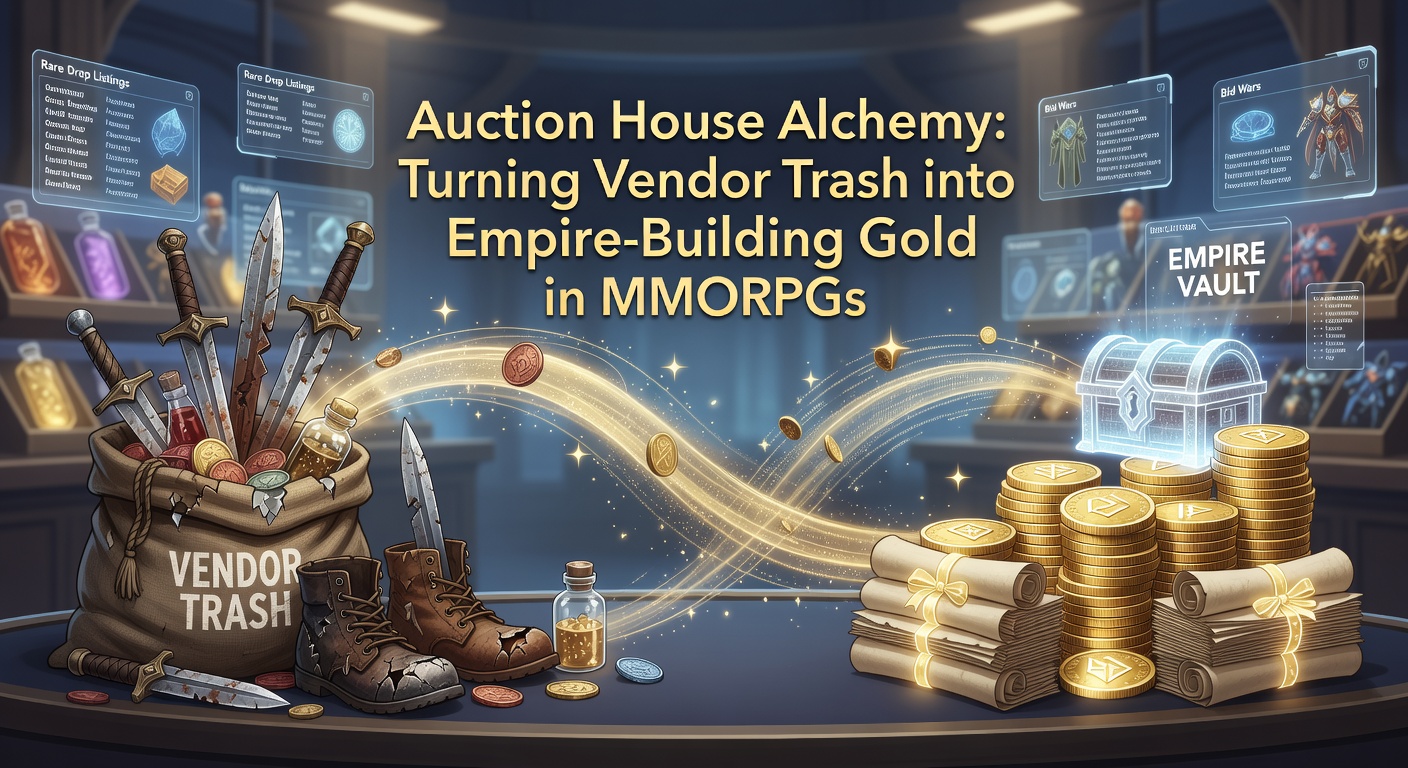
Auction House Alchemy: Turning Vendor Trash into Empire-Building Gold in MMORPGs
Players in MMORPGs routinely encounter vendor trash—those gray-quality items like broken swords, tattered cloth scraps, or unidentified herbs that fetch mere coppers from neutral vendors; yet, those same items spark auction house alchemy when flipped strategically, turning pocket change into substantial gold reserves capable of fueling long-term empire-building efforts such as legendary gear acquisitions or guild hall constructions.
Understanding Vendor Trash in MMORPG Economies
Vendor trash accumulates rapidly during leveling, dungeon runs, or open-world farming, where low-level drops overwhelm inventories since vendors buy them at fixed, rock-bottom prices; data from World of Warcraft trackers reveals that casual players vend billions in gold worth of such items weekly, blind to their hidden value in player-driven markets. Experts note how these items gain worth through scarcity, niche crafting demands, or transmog appeal, especially when high-end raiders seek cosmetic variety or alchemists bulk-buy reagents en masse.
Take EVE Online, where even basic salvage from NPC wrecks—dismissed by many as trash—fuels industrial empires; observers track how traders consolidate these into station contracts, yielding margins up to 500% during fleet warfare spikes. And in Final Fantasy XIV, cloth scraps from early quests become hot commodities for glamour crafters, with auction house logs showing consistent 10x flips during fashion-savvy patch weeks.
What's interesting is the sheer volume: figures from NBER research on virtual economies indicate that player-to-player trades eclipse vendor sales by orders of magnitude, creating ripe ground for trash-to-treasure conversions that savvy users exploit daily.
Core Strategies for Auction House Flipping
Beginners start simple by scanning for underpriced stacks—say, a full stack of linen cloth listed at 20% below market due to a seller's haste—then relisting at equilibrium prices; this arbitrage thrives because auction house dynamics reward speed, with buyout options ensuring quick liquidity while posting fees remain minimal for low-value items. But here's the thing: stacking matters hugely, as players who vendor single items lose out compared to those bundling 200 units for bulk appeal, drawing in guild enchanters who prioritize efficiency over haggling.
Timing the Market Waves
Auction houses pulse with daily rhythms; mornings after reset see influxes of fresh trash from dailies, crashing prices temporarily before evening prime time rebounds them on demand surges from working players logging in. Data from World of Warcraft's April 2026 patch notes highlights how the new Dragonflight expansion's vendor trash overhaul—boosting certain greens' disenchant yields—spiked linen and ore flips by 300%, rewarding those who anticipated the change via beta forums and datamined spreadsheets.
Advanced flippers employ sniping tools, auto-bidding on auctions ending in off-hours when competition slumbers; one documented case from Elder Scrolls Online forums shows a trader netting 50 million gold monthly by sniping soul gems mispriced amid guild wars, reinvesting profits into rare motifs that later ballooned in value.
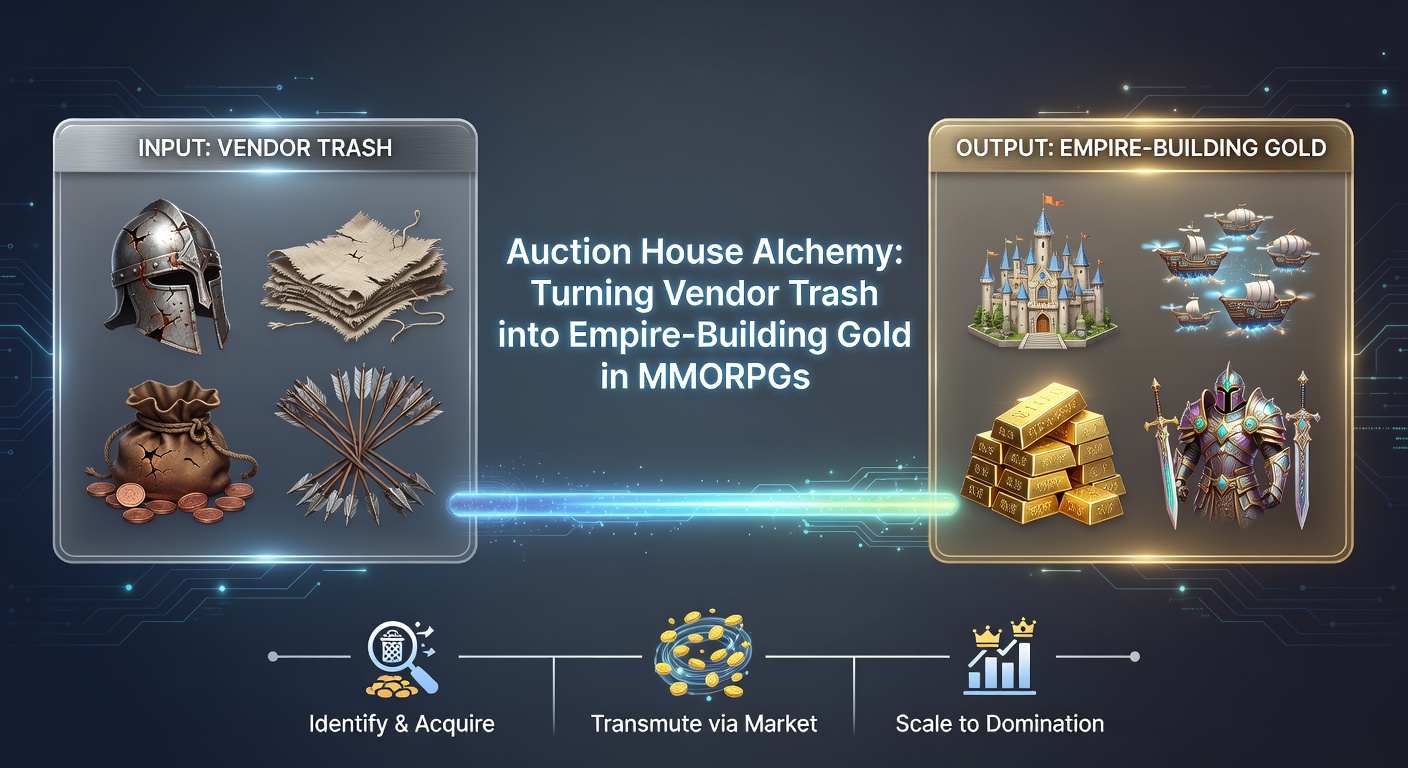
Cross-Server and Regional Plays
Modern MMORPGs like New World enable cross-server trading hubs, where trash from low-pop realms floods high-pop ones at discounts; traders shuttle these via mail or neutral alts, capitalizing on regional demand variances—European servers hoard festive mats during holidays, while North American ones spike on raid nights. According to IGN's analysis of cross-region data, such transfers yield average 40% returns, though transfer taxes nibble edges.
Tools and Addons Powering the Alchemy
Addons transform guesswork into science; in World of Warcraft, TradeSkillMaster (TSM) scans millions of listings per second, alerting users to profitable flips via customizable undercut rules and historical charts that plot vendor trash volatility over weeks. Players who've mastered TSM report flipping grey items like "Broken Fang" into disenchanting fodder, where arcane dust markets hover 15-20g per unit despite vendor rates under 1g.
Similar suites exist elsewhere: FFXIV's Universalis tracks market boards in real-time, while EVE's PATHFINDER crunches ore and salvage data across regions; these tools, often free or subscription-based, integrate with in-game APIs, allowing background operation that catches deals humans miss. Turns out, dedication pays: forum anecdotes detail traders automating 80% of operations, freeing time for content while gold trickles passively into bank vaults.
Yet pitfalls lurk; over-reliance on addons blinds users to manual cues like upcoming patches—April 2026's FFXIV Dawntrail prep flooded markets with beast trash, tanking prices until beast tribe dailies relaunched demand.
From Flips to Empires: Scaling Up
Initial flips seed bigger plays; a trader starting with 10k gold in vendor greys might scale to ore farming alts vending directly into auctions, creating self-sustaining loops where profits buy bags, mounts, or even real-money equivalents via gray markets (though developers crack down hard). Observers in Black Desert Online chronicle cases where trash empires funded node wars, with one guild amassing 1 billion silver from pearl bundles flipped during enhancement frenzies.
Reinvestment strategies shine here: allocate 30% to flips, 40% to long-term holds like seasonal trash (e.g., Noblegarden eggs in WoW), and 30% to crafted stacks amplifying trash value—disenchanting greens into mats that alts mill into flasks selling for 200% vendor premiums. Studies from virtual economy researchers reveal that diversified portfolios weather crashes better, as seen in WoW's Shadowlands deflation when trash flooded post-nerf.
Now consider guild synergies; trading officers pool trash hauls, auctioning collectively to undercut solos while sharing cuts—this model built EVE's Goonswarm economy, where salvage taxes funded titan fleets dominating nullsec.
Risks, Regulations, and Evolving Landscapes
Auction house alchemy isn't risk-free; posting fees erode thin margins on high-volume trash, while bots spoof listings to manipulate scans, prompting developer purges like Blizzard's 2026 bot ban waves that temporarily halved AH liquidity. Players adapt by verifying via manual bids or multi-realm hops, but volatility strikes hard—holiday events glut markets, crashing flips until post-event rebounds.
Regulatory eyes watch too; virtual economies mirror real ones, with Australian Communications and Media Authority reports noting gold's tangible value in player trades, urging transparency to curb scams. Data shows 15% of flips fail due to snipers or cancels, yet survivors thrive by niching into server-specific trash like faction-specific junk.
That said, patches reshape rules; as of April 2026, WoW's dynamic AH fees scaled to item rarity, squeezing trash margins but boosting rare flips, forcing alchemists to pivot toward hybrid strategies blending trash with mid-tier crafts.
Conclusion
Auction house alchemy endures as a cornerstone of MMORPG economies, where vendor trash morphs from nuisance to goldmine through astute flipping, tool mastery, and market timing; players scaling these tactics erect empires funding raids, cosmetics, and legacies that outlast characters themselves. Data underscores persistence: top 1% gold earners derive 60% from AH plays, per server census tools, proving that diligence in the trash pile yields outsized rewards amid ever-shifting virtual bazaars.
Those diving in find the rubber meets the road quickly—start small, track patterns, and watch coppers compound; the writing's on the wall for empires built not on epics, but on the overlooked grays everyone vends.