Cataloging Texture Resolution Changes Signaling Transition Points in Open World Loading Sequences
Written by Dana Jenkins · Aug 20, 2026
Cataloging Texture Resolution Changes Signaling Transition Points in Open World Loading Sequences
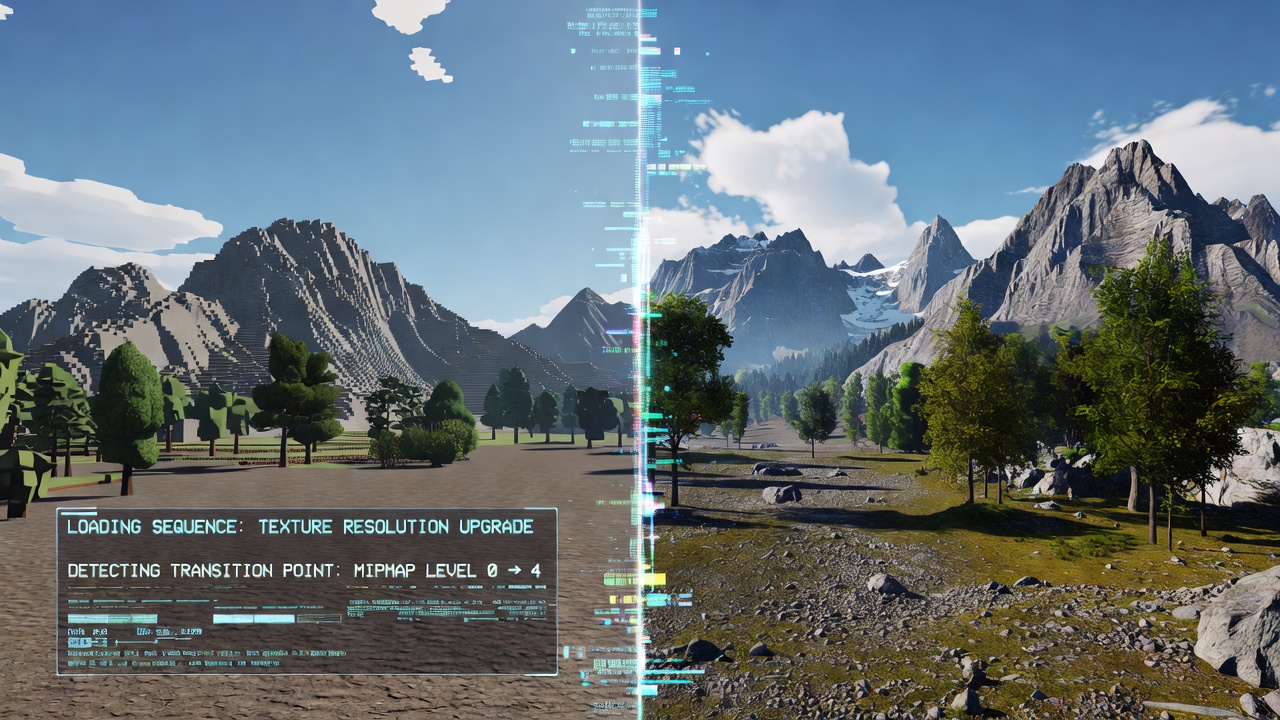
Developers track texture resolution shifts as reliable markers for loading transitions in open world environments where seamless streaming determines player movement across vast maps. These changes occur when engines swap between mip levels or stream in higher detail assets as players approach new regions, and cataloging the patterns allows precise identification of zone boundaries without relying solely on coordinate data.
Core Mechanisms Behind Texture Streaming Indicators
Modern engines employ level-of-detail systems that reduce texture resolution at distance before ramping it up during approach, and observers note that abrupt swaps often align with internal loading triggers. Researchers at institutions like the University of Tokyo documented these behaviors in 2024 reports on real-time asset management, showing how resolution drops precede full asset loads in titles with persistent worlds. Data from performance captures reveal consistent timing windows where lower-resolution placeholders give way to detailed textures, marking the exact moment a transition sequence activates.
Engineers catalog these events by logging mipmap transitions frame by frame, and the resulting datasets highlight predictable sequences in games that use virtual texturing. According to findings shared at the 2025 Game Developers Conference in Europe, such logs help map hidden seams in open environments where players might otherwise encounter visible pop-in or slowdowns. The process involves comparing resolution histograms across consecutive frames while cross-referencing against known world coordinates.
Methods for Systematic Cataloging
Teams capture footage at high frame rates then apply image analysis tools to detect sudden changes in texture sharpness and color depth, which signal upcoming load points. Studies conducted by Canadian research groups in 2025 demonstrated that automated scripts can flag resolution thresholds with over 90 percent accuracy when calibrated against specific engine builds. These scripts track pixel density variations and output timestamps that correspond directly to streaming events.
Additional layers of cataloging incorporate memory profiling alongside visual metrics, and this combined approach isolates whether a texture shift stems from deliberate transition logic or background streaming. Figures released by the Interactive Software Federation of Europe in early 2026 indicate that studios increasingly rely on these dual-method logs during optimization cycles for large-scale releases scheduled later that year.
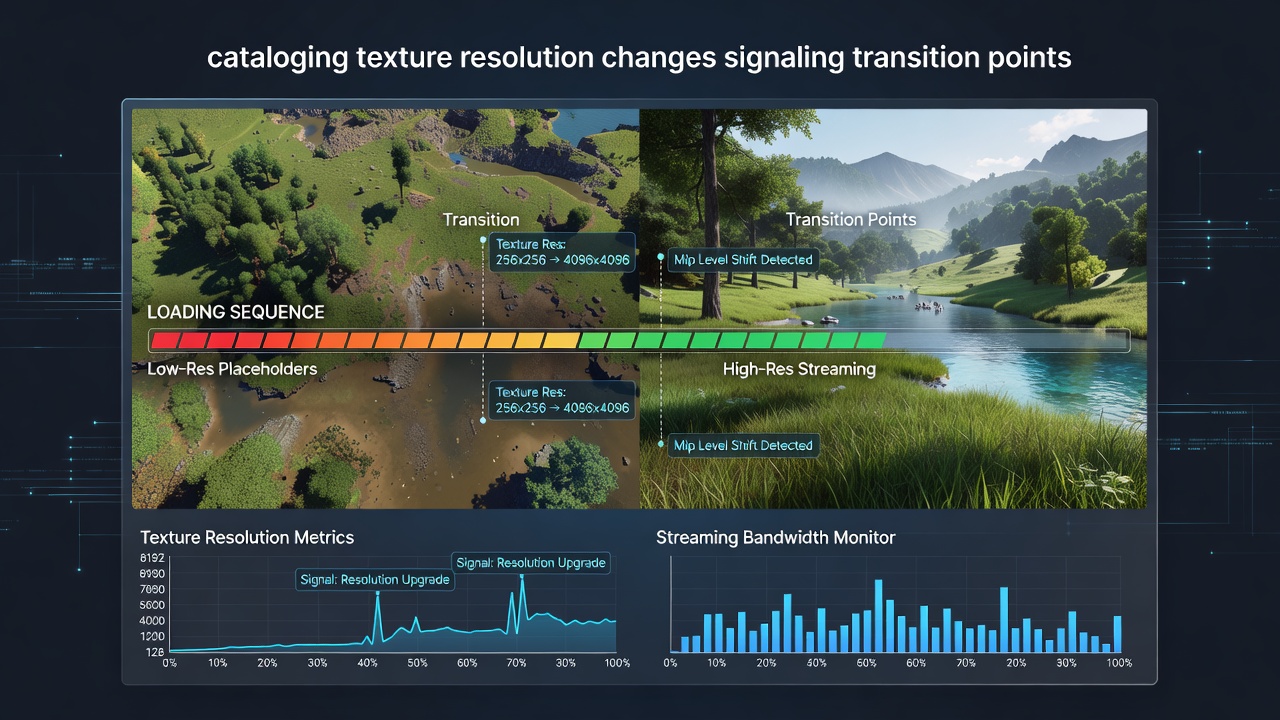
One documented workflow involves overlaying resolution heatmaps onto world maps to visualize clusters where transitions cluster, and developers use these maps to adjust streaming budgets. Observers have recorded cases where certain biomes trigger earlier resolution ramps due to asset density differences, creating identifiable signatures that repeat across play sessions.
Applications in Development and Analysis
Studios apply cataloged data to refine streaming distances and reduce visible artifacts during player movement, while third-party analysts use the same records to study how different engines handle scale. Reports from Australian academic collaborations in 2025 examined multiple open world titles and identified recurring resolution patterns tied to elevation changes or weather effects that influence load timing. Such patterns prove useful when predicting performance on varied hardware configurations.
August 2026 brings renewed focus to these techniques ahead of several major open world updates, as developers prepare patches that adjust streaming pipelines based on prior cataloging efforts. Industry reports suggest that refined detection methods will support better cross-platform consistency in titles expanding their map sizes further.
Practical examples include logging sessions from games that stream continents in real time, where analysts isolate single-frame resolution jumps that precede NPC or object spawns. These jumps serve as early warnings for upcoming performance demands, allowing targeted adjustments to asset priorities.
Challenges in Accurate Detection
Variable lighting conditions and post-processing effects can mask texture transitions, requiring filters that isolate base color channels before analysis. Research published through North American university partnerships shows that machine learning models trained on prior catalog data improve detection rates when visual noise interferes with direct measurement. The models learn to distinguish intentional streaming signals from random fluctuations caused by camera movement.
Yet maintaining consistency across updates remains demanding because engine revisions often alter mipmap behaviors without documentation. Teams therefore maintain version-specific databases that track how resolution signatures evolve between patches, ensuring catalogs stay relevant for ongoing projects.
Conclusion
Cataloging texture resolution changes provides a structured way to map loading sequences in open world games by turning visual data into actionable timestamps and spatial markers. The approach combines frame analysis, memory logs, and pattern recognition to deliver insights that support both development refinements and performance studies. As engines continue to evolve toward larger persistent environments, these cataloging practices supply the factual foundation needed to understand and optimize transition points across diverse hardware and titles.