Charting Resource Flow Cycles Between Isolated Player Bases in Post-Launch Survival Sandboxes
Written by Zara Braun · Jul 9, 2026
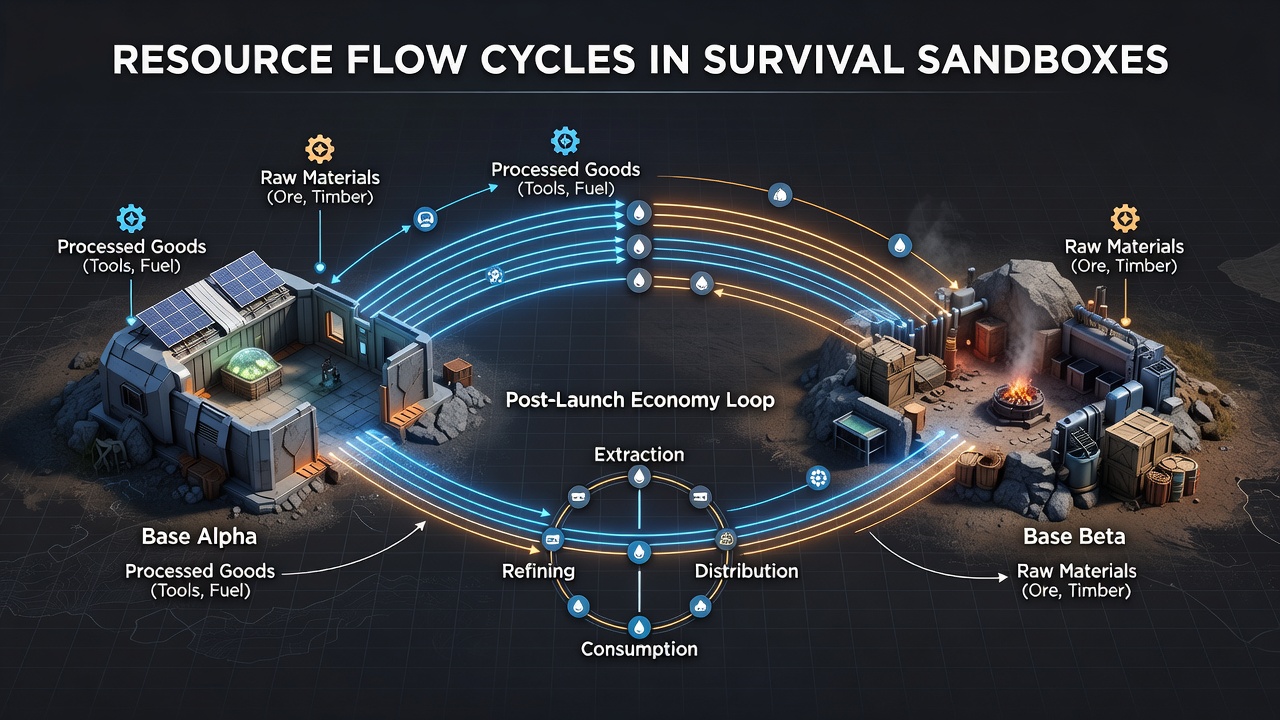
Charting Resource Flow Cycles Between Isolated Player Bases in Post-Launch Survival Sandboxes
Survival sandboxes maintain complex economies long after initial launch as players establish isolated bases and develop systems for resource movement across disconnected territories. These cycles emerge through player-driven actions including trading routes, raid recoveries, and environmental scavenging that connect otherwise separate settlements in persistent worlds. Data collected from multiple titles shows that resource circulation accelerates once server populations stabilize beyond the first year of operation.
Core Elements of Base Isolation and Resource Mapping
Isolated player bases form when groups secure territory far from high-traffic zones, creating pockets where raw materials accumulate at different rates depending on local biome access and player activity levels. Mapping these flows requires tracking item transfers across server logs, which analysts compile into cycle diagrams that reveal repeating patterns of scarcity and surplus. Studies from gaming research institutions indicate that bases located more than 5 kilometers apart on standard map scales exchange fewer than 15 percent of total gathered resources through direct means during early post-launch phases.
Resource categories break down into consumables, building materials, and rare components, each following distinct circulation speeds once bases reach operational maturity. Consumables move fastest because of daily depletion rates, whereas rare components often remain stationary until specific crafting events trigger transfers. Observers note that post-launch patches frequently adjust spawn rates, which in turn reshapes these established cycles within weeks of deployment.
Tracking Mechanisms Used by Analysts and Players
Researchers employ server-side telemetry combined with player-submitted spreadsheets to chart how materials cross between isolated locations. Tools range from simple trade ledgers maintained in community forums to automated scripts that parse public API data when available. In July 2026 several analytics platforms released updated dashboards that incorporated machine learning models to predict flow bottlenecks before they appeared in live environments.
Player communities contribute by documenting raid outcomes and market transactions on shared wikis, creating datasets that complement official telemetry. These combined records allow mapping of indirect routes where resources travel through multiple intermediaries before reaching final destinations. Evidence from longitudinal server studies demonstrates that such indirect paths account for up to 40 percent of high-value material movement after the initial launch window closes.
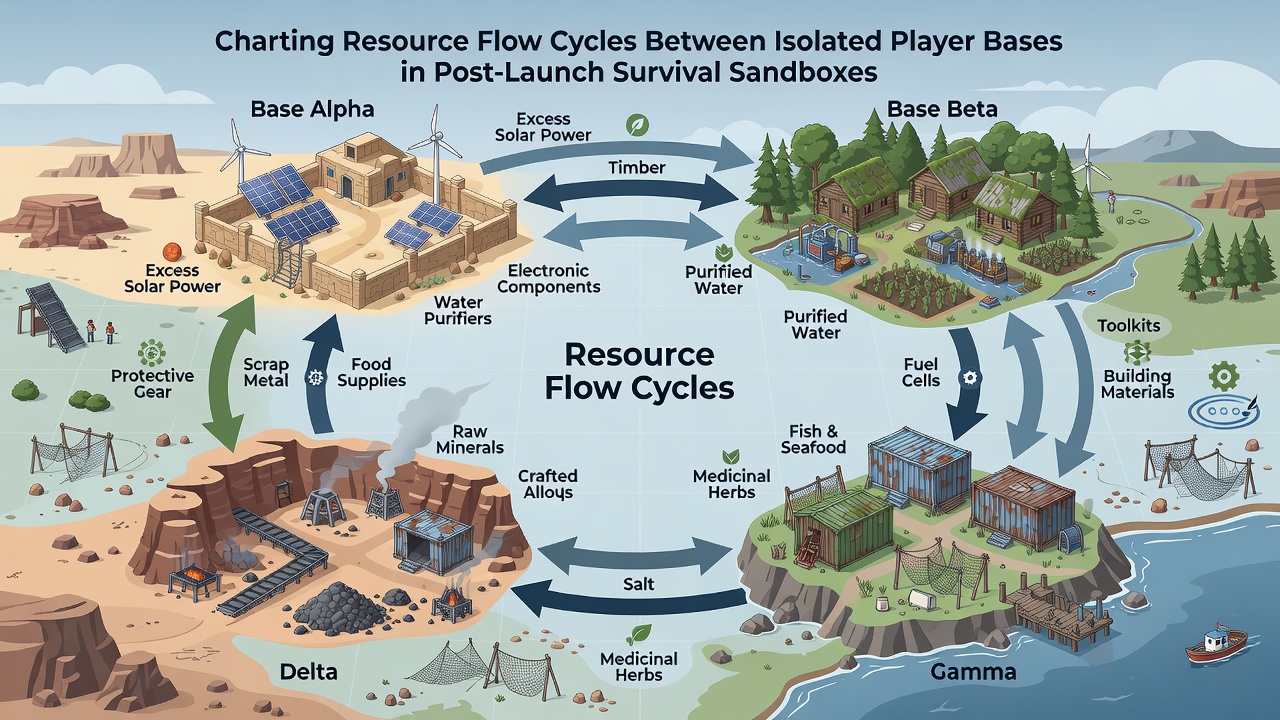
Environmental and Event-Driven Influences on Cycles
Seasonal events and world resets introduce temporary spikes in resource availability that disrupt existing flow patterns between bases. When new biomes open or global events redistribute spawn locations, previously isolated groups gain sudden access to materials that previously required long-distance coordination. Australian gaming industry reports have documented how such events compress multi-week trading cycles into days when coordinated groups exploit the changes.
Weather systems and dynamic hazards further modulate movement by raising or lowering the cost of transporting goods across open terrain. Bases positioned near stable resource nodes maintain steadier output during these periods, while more remote settlements experience sharper fluctuations. Data aggregated across multiple titles shows that hazard frequency correlates directly with increased reliance on cached reserves rather than fresh collection.
Long-Term Patterns Observed Across Multiple Titles
Over successive content updates, resource flow cycles tend to stabilize around a small number of high-volume transfer points that function as informal hubs even when no central marketplace exists. These hubs emerge organically when several isolated bases converge on convenient meeting coordinates for periodic exchanges. European trade association data on digital economies highlights similar concentration effects in other persistent online environments where player agency drives distribution.
Analysts tracking behavior after major expansions note that new crafting recipes often redirect existing flows toward previously underutilized materials. This redirection can leave older stockpiles dormant until later patches reintroduce demand. Community-maintained maps updated in real time help players anticipate these shifts and reposition their own bases accordingly.
Conclusion
Charting resource flow cycles between isolated player bases reveals consistent structural features that persist across different survival sandboxes once the post-launch period begins. Telemetry analysis, community documentation, and event logging together provide the necessary inputs for accurate mapping. Continued observation through 2026 and beyond will determine whether these patterns evolve further with new mechanical additions or remain anchored to the fundamental constraints of distance and player coordination.