Charting the Influence of Spectator Modes on Strategic Decision-Making in Team-Based Digital Contests
Written by Blake Lang · Jul 12, 2026
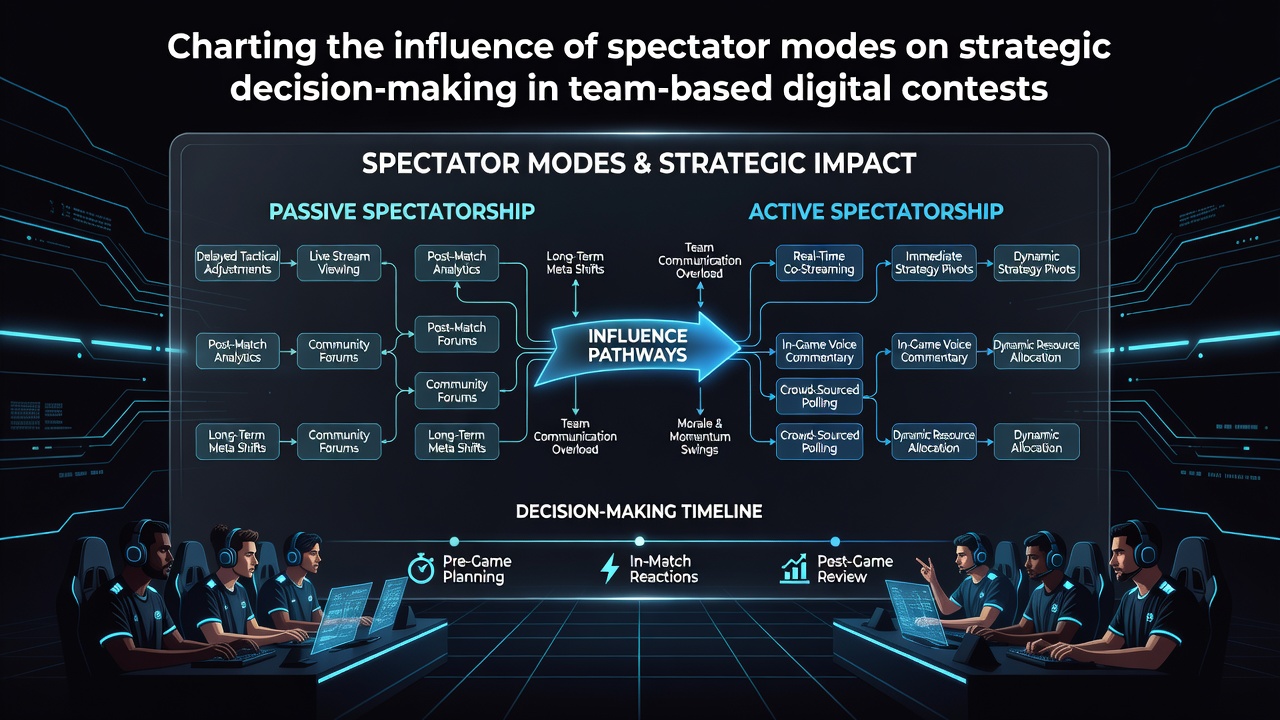
Charting the Influence of Spectator Modes on Strategic Decision-Making in Team-Based Digital Contests
Observers note that spectator modes have become integral tools in team-based digital contests where players and coaches access real-time views beyond their own perspectives. These modes allow teams to monitor opponent movements, resource allocations, and positioning data across maps in games such as Dota 2 and Counter-Strike 2. Researchers at various institutions have documented how this visibility alters in-match adjustments, with data showing faster rotations and revised callouts when full-field information becomes available through dedicated observer feeds. In July 2026 several major tournaments expanded spectator toolkits to include predictive overlays that highlight resource respawn timers and cooldown tracking. Teams participating in those events adapted their pre-round planning sessions to incorporate live spectator data streams, which shifted emphasis from memorized patterns to dynamic responses based on visible enemy compositions. Figures from industry reports indicate that squads with access to multi-angle spectator views recorded higher rates of successful objective captures compared to those limited to player perspectives alone.Mechanisms Driving Strategic Adjustments
Spectator modes operate through layered camera systems that cycle between player viewpoints, free-roam observers, and director-controlled sequences. Coaches seated in separate booths review these feeds to relay positional intelligence via voice comms, enabling mid-round pivots that would otherwise require risky scouting maneuvers. Studies conducted by academic groups reveal that information latency in these systems averages under two seconds, a timeframe short enough to influence immediate decisions such as grenade placements or ultimate ability timing.
Teams often integrate spectator data into shared overlays that mark enemy sightlines and potential flank routes. This practice reduces uncertainty during engagements because players receive constant updates on locations they cannot directly observe. Data compiled across professional leagues shows a measurable uptick in coordinated pushes when spectator feeds remain active throughout the match duration rather than restricted to pauses or intermissions.
Evidence from Tournament Records
Analysis of match logs from 2025 through mid-2026 demonstrates clear correlations between spectator mode availability and changes in team compositions. Squads that reviewed full spectator replays between maps adjusted hero or agent selections more frequently than those relying solely on internal comms. One study released by the University of Sydney's Digital Games Lab tracked over 400 professional matches and found that spectator-informed teams executed 18 percent more successful counter-strategies in the second half of series.
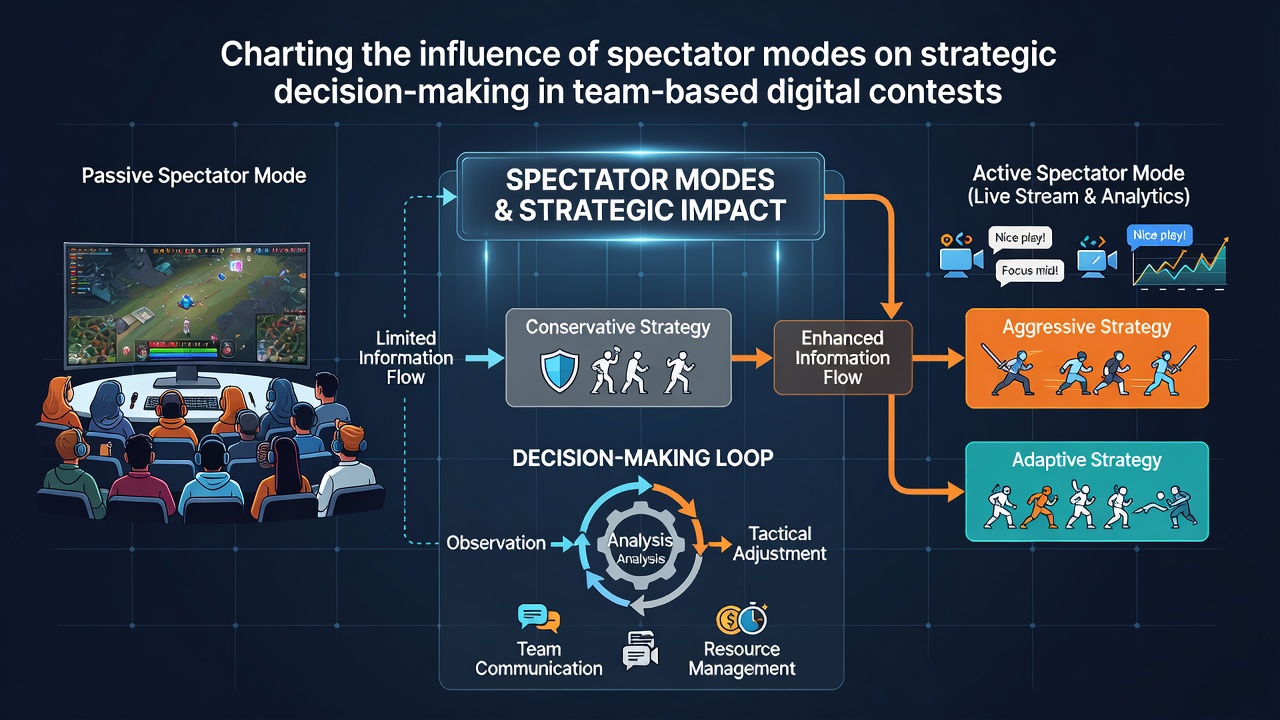
European Esports Federation publications have catalogued similar patterns across regional qualifiers where spectator tools were standardized. Those reports highlight how smaller organizations leveraged the same data streams as larger ones, narrowing performance gaps in draft phases and early-game skirmishes. The federation's dataset includes timestamps showing decision points where spectator views directly preceded shifts in lane assignments or defensive setups.
Integration with Communication Protocols
Voice channels in team environments now routinely incorporate spectator-derived callouts that supplement direct player observations. This layered information flow creates redundancy that protects against individual blind spots yet requires disciplined filtering to avoid overload. Research from the Korea Esports Association indicates that squads training with filtered spectator summaries maintained higher accuracy in target prioritization during simulated high-pressure scenarios.
Technical implementations vary by title, yet the core effect remains consistent: access to third-party perspectives accelerates learning loops within matches. Teams compile post-game metrics that compare decision speed and outcome success when spectator data is present versus absent, producing internal benchmarks used for roster development.
Conclusion
Records from ongoing digital contests continue to accumulate evidence that spectator modes reshape how teams process battlefield information and execute coordinated responses. As platforms refine these tools with additional data layers, the documented influence on strategic timing and adaptation is expected to expand in measurable ways across future seasons.