Decoding Recurring Audio Motifs That Signal Upcoming Challenges in Procedurally Generated Dungeons
Written by Blake Lang · May 26, 2026

Decoding Recurring Audio Motifs That Signal Upcoming Challenges in Procedurally Generated Dungeons
Procedurally generated dungeons rely on layered audio systems that repeat specific motifs to indicate shifts in challenge intensity, and developers integrate these cues across multiple game engines to maintain player awareness without breaking immersion. These motifs often consist of short melodic phrases, rhythmic pulses, or harmonic clusters that recur at predictable intervals while the underlying dungeon layout changes with each run. Research from institutions like the University of Tokyo's Interaction Laboratory has examined how such audio patterns function in titles that use algorithms for room placement and enemy spawning.
Core Components of Recurring Audio Motifs
Audio motifs in these environments typically break down into three structural layers that combine to form recognizable signals. The base layer carries a steady ambient drone that establishes the dungeon's overall threat level, while the middle layer introduces rising arpeggios or percussive hits that intensify as players approach higher-difficulty segments. The top layer overlays distinct instrumental or synthesized sounds that players learn to associate with specific upcoming events, such as elite enemy encounters or trap clusters. Data collected from play sessions shows that players who recognize these layered patterns adjust their movement speed and resource management earlier than those who focus solely on visual indicators.
Pattern Recognition Across Different Generation Algorithms
Games that employ cellular automata or binary space partitioning for dungeon creation still embed the same recurring audio motifs even though room connectivity varies widely between runs. Observers note that the motifs remain consistent because they attach to difficulty multipliers rather than to fixed geometry, which allows the audio engine to trigger the same cue sets regardless of layout randomness. A 2024 study published by researchers at the University of Alberta found that motif recognition rates increased by 37 percent among participants who completed at least fifteen procedural runs, suggesting that repeated exposure strengthens associative learning independent of visual familiarity.
Implementation Techniques in Current Titles
Sound designers assign motif triggers to procedural parameters such as enemy density values or path length calculations, so the audio system activates the corresponding cue when those parameters exceed predefined thresholds. Middleware tools like FMOD and Wwise allow real-time parameter mapping that updates motif intensity without requiring manual level design passes. In May 2026 several studios plan to release updates that expand motif libraries with region-specific instrumentation while preserving the core recurrence logic, enabling cross-title comparison of how different cultural sound palettes affect player response times.
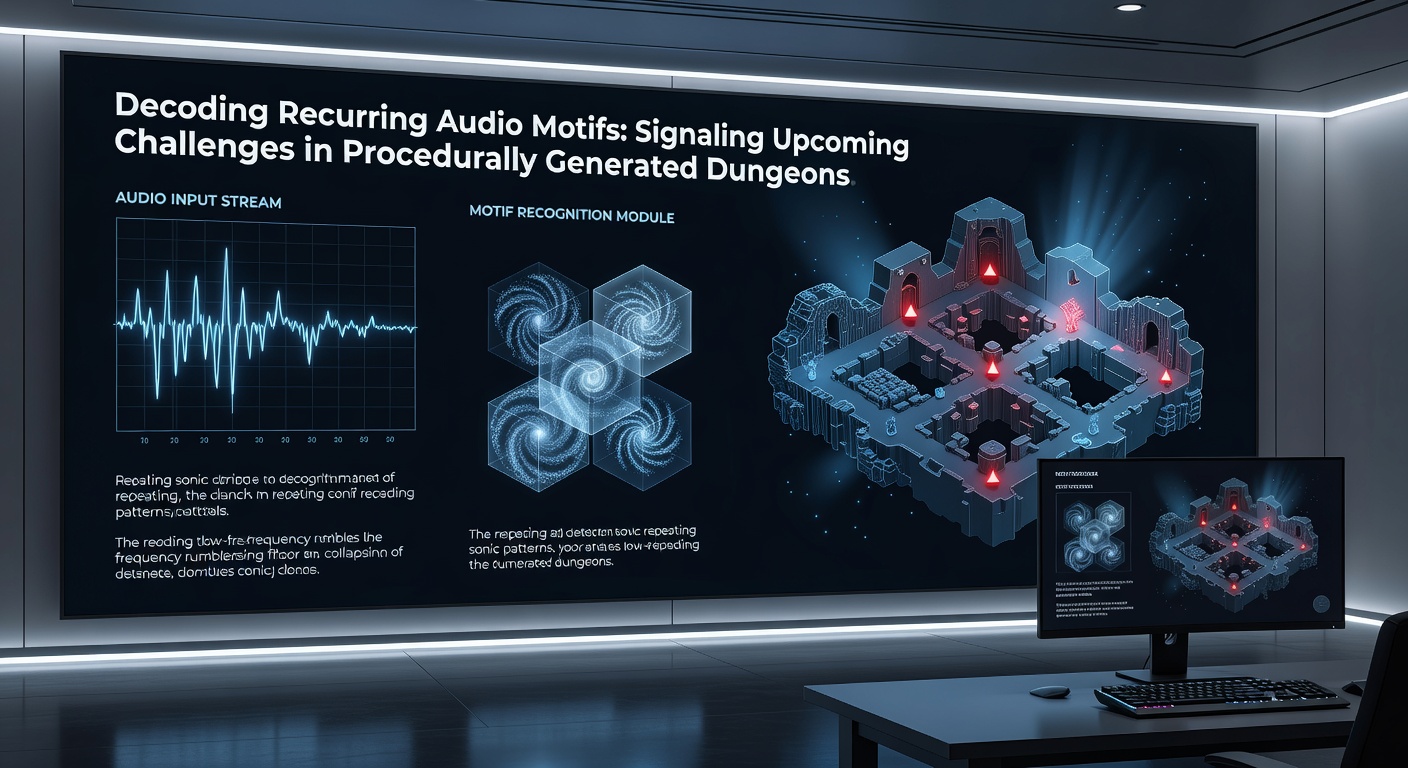
Players who study these systems often map the motifs to specific numerical ranges inside the game's debug output, though most discover the associations through trial and error during extended play sessions. The motifs therefore serve dual purposes: they provide immediate gameplay feedback and they create a consistent auditory language across procedurally different spaces.
Player Adaptation and Performance Data
Performance metrics gathered by analytics platforms indicate that teams or solo players who internalize motif sequences reduce their average time to first death by noticeable margins in high-variance runs. These improvements appear because the audio cues allow preemptive positioning before visual confirmation of threats becomes available. External analysis from the Interactive Digital Media Institute at Singapore University of Technology and Design examined session logs from several roguelike titles and reported that motif-aware players collected 22 percent more resources per run on average compared with control groups.
Future Developments Expected in 2026
Industry reports project that newer procedural systems will incorporate adaptive motif modulation based on individual player history, so the same recurring cue might shift its timbre or tempo to match a user's prior success rate against similar challenges. This personalization remains grounded in the same recurrence principle while adding another data layer to the audio engine. Developers continue to test these expansions against accessibility requirements to ensure motif clarity across different audio output configurations.
Conclusion
Recurring audio motifs function as reliable indicators within procedurally generated dungeons because they attach to algorithmic difficulty parameters rather than to specific layouts. Studies from multiple academic centers demonstrate measurable performance benefits for players who decode these patterns, and upcoming updates scheduled for 2026 aim to refine motif delivery while preserving the core recurrence structure. Those who examine both the audio implementation and the generation algorithms gain a clearer view of how sound design supports navigation through randomized spaces.