Extracting Metadata from Video Captures to Verify Frame Timing Claims in Technical Discussions
Written by Blake Lang · Jul 30, 2026
Extracting Metadata from Video Captures to Verify Frame Timing Claims in Technical Discussions
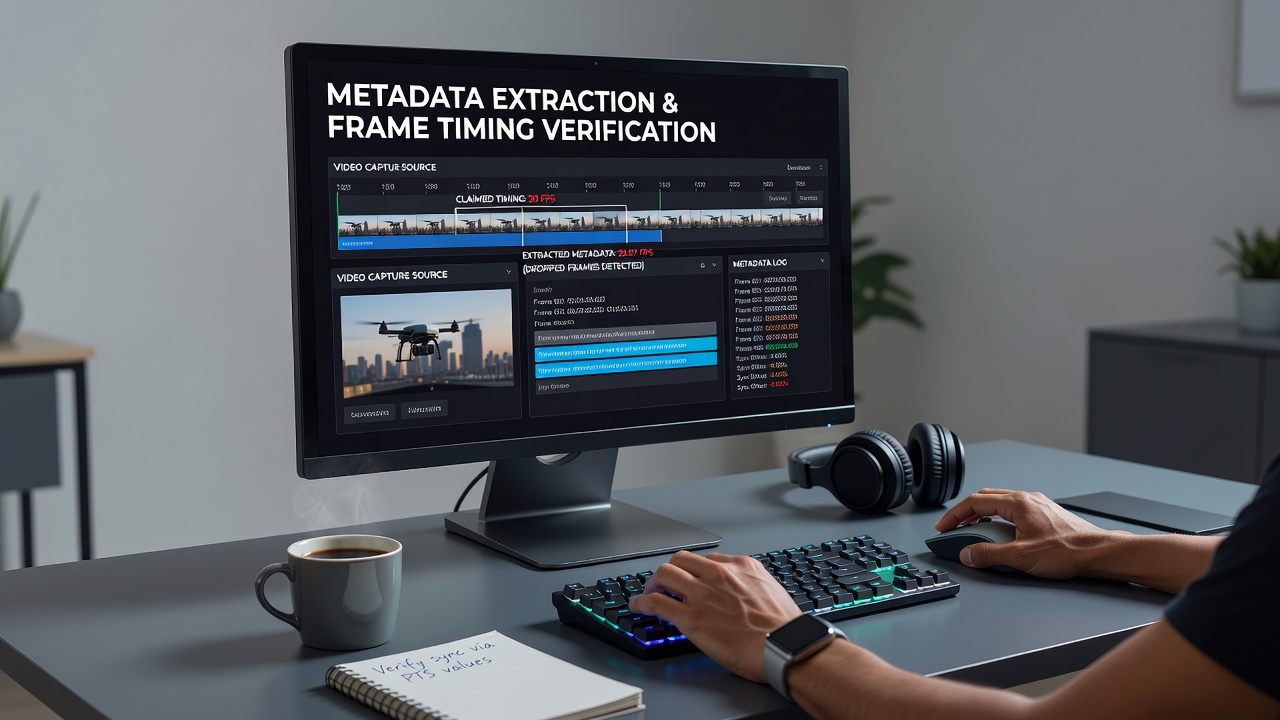
Video captures often contain embedded metadata that reveals precise details about frame rates, timestamps, and encoding parameters, which allows researchers and analysts to verify timing claims made during technical discussions. Experts in digital forensics and media analysis rely on these data points because they provide objective records that go beyond visual inspection alone. Tools such as ffprobe and MediaInfo extract this information directly from container formats including MP4, MOV, and MKV, revealing frame duration values down to the millisecond level while also logging any variable frame rate shifts that occur during recording sessions.
Core Metadata Fields Relevant to Frame Timing
Key fields include the average frame rate reported in the stream header, the duration per frame calculated from time base values, and presentation timestamps that mark when each frame should display relative to the start of playback. Analysts cross-reference these entries against claimed performance metrics in engineering reports or software testing logs, which helps confirm whether a video sequence actually matches assertions about synchronization or latency. Data from the Consumer Technology Association indicates that professional capture devices record these values consistently when hardware encoders operate within specified tolerances, yet discrepancies appear when software post-processing alters the original stream.
Researchers discovered that variable frame rate footage presents additional challenges because individual frames may deviate from the nominal rate listed in the header. In such cases, parsing the full frame-by-frame timestamp table becomes necessary to calculate true intervals between successive frames. Observers note that this process often uncovers compression artifacts or dropped frames that visual playback alone might miss during casual review.
Practical Extraction Workflows Used by Analysts
Professionals begin by running command-line utilities to output stream information in structured formats, then parse the results to isolate timing-related attributes. Subsequent steps involve comparing extracted values against reference clocks from the capture hardware itself, which creates an audit trail that supports claims made in technical forums or conference presentations. In July 2026 several international standards bodies updated guidelines on digital evidence handling, emphasizing the need for reproducible metadata workflows when timing disputes arise in collaborative research environments.
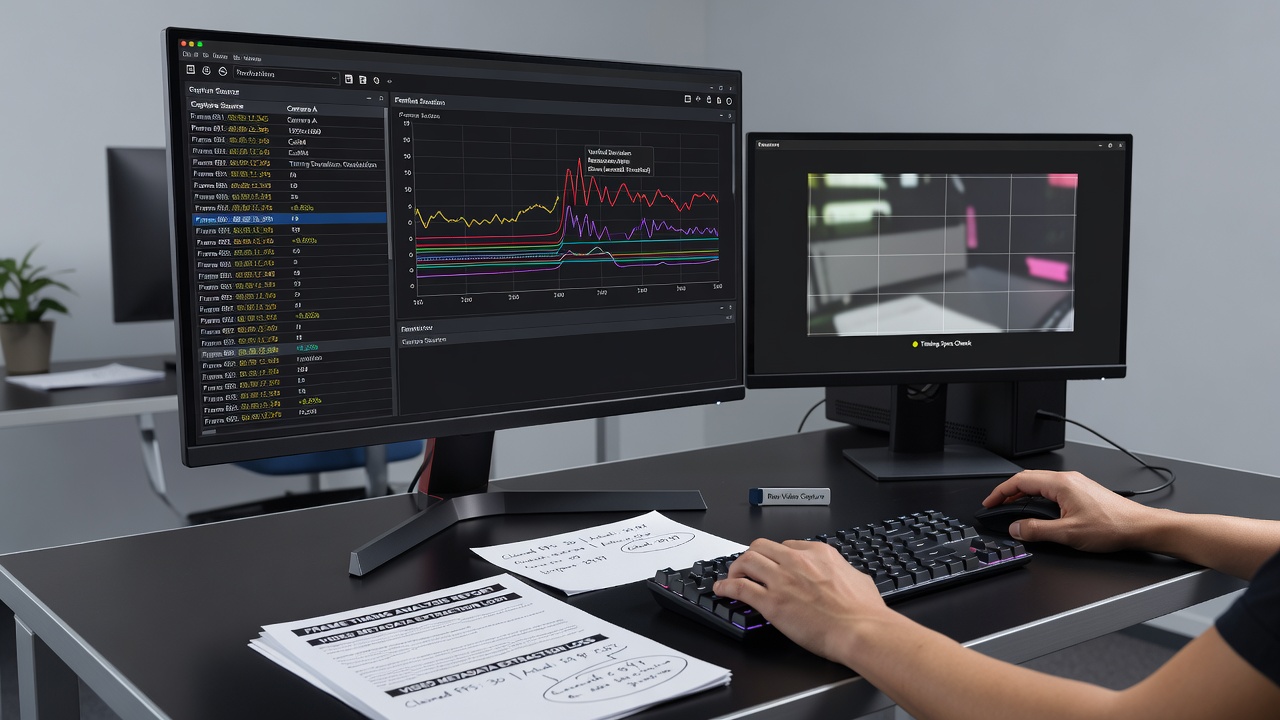
Take one laboratory that examined video evidence from high-speed industrial processes; the team used open-source libraries to generate CSV reports of every frame's presentation timestamp, which allowed them to demonstrate that reported cycle times aligned precisely with the recorded sequence. Another case involved remote collaboration sessions where participants questioned network-induced delays, adn metadata review confirmed that frame intervals remained stable despite apparent playback stuttering caused by decoder buffering rather than capture issues.
Verification Techniques in Collaborative Technical Settings
Teams often integrate metadata analysis into shared documentation platforms so multiple reviewers can inspect the same timing data without relying on subjective interpretations of video playback speed. According to a report from the National Institute of Standards and Technology, standardized extraction protocols reduce ambiguity when participants in distributed discussions present competing claims about sequence accuracy. The process typically incorporates checksum verification of the original file to ensure no alterations occurred between capture adn analysis.
Academic studies from institutions in Australia have shown that combining metadata extraction with statistical sampling of frame intervals produces reliable confidence intervals for timing assertions. These methods prove especially useful when discussions involve real-time rendering pipelines or sensor synchronization across multiple recording devices. Analysts further validate findings by re-encoding short segments under controlled conditions and comparing the resulting metadata against the original capture, which isolates any changes introduced during editing or format conversion.
Limitations and Complementary Approaches
Metadata alone cannot address every scenario because certain capture devices omit detailed frame timing information or apply proprietary encoding that obscures internal clocks. In those situations, supplementary techniques such as embedding external timecode generators or cross-referencing audio waveform peaks become necessary to build a complete verification record. European research consortia have documented cases where hybrid approaches combining metadata review with visual fiducial markers delivered higher accuracy than either method used independently.
Industry organizations including the Society of Motion Picture and Television Engineers publish recommended practices that guide practitioners on when metadata extraction suffices and when additional instrumentation is required. These guidelines stress the importance of documenting the full chain of custody for both the video file and the extraction tools employed during analysis.
Conclusion
Metadata extraction from video captures supplies verifiable data that supports or refutes frame timing claims in technical discussions across engineering, research, and media production fields. Consistent application of established tools and protocols enables objective comparison between recorded sequences and asserted performance characteristics. Continued refinement of extraction methods alongside evolving standards ensures these techniques remain effective as capture technologies advance.