How Procedural Audio Layering Shapes Split-Second Decision Making in Asynchronous Multiplayer Challenges
Written by Blake Lang · Aug 25, 2026
How Procedural Audio Layering Shapes Split-Second Decision Making in Asynchronous Multiplayer Challenges
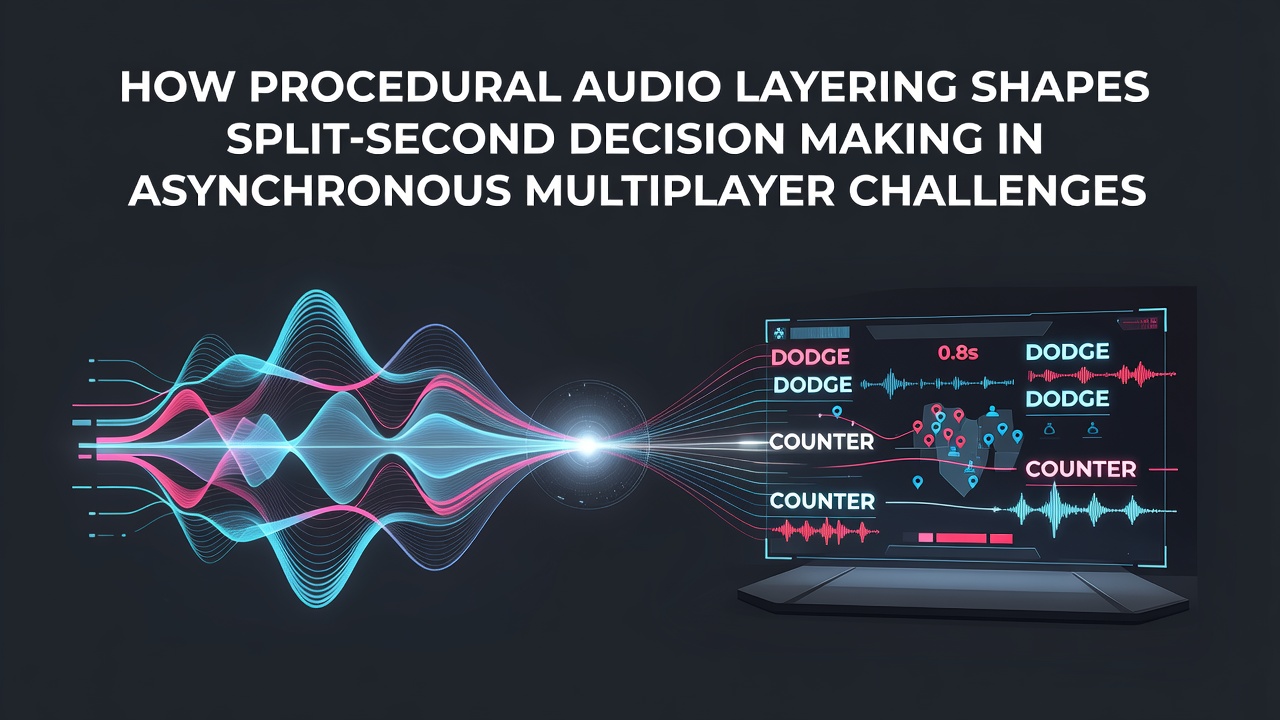
Procedural audio layering generates dynamic soundscapes in asynchronous multiplayer challenges where participants submit actions at different times yet still face interconnected outcomes. Game systems adjust individual audio tracks for effects, music, and ambient elements based on aggregated player inputs from previous turns, creating audio cues that influence how competitors interpret incoming data and select responses within tight windows. Researchers have documented these mechanisms across multiple titles released since 2023, with patterns emerging in mobile strategy platforms and cross-platform tactical simulators.
Mechanics of Procedural Audio Layering
Audio engines process variables such as opponent move frequency, resource accumulation rates, and environmental modifiers to stack or thin out sound layers without requiring live synchronization. A base track might remain constant while additional percussion or harmonic elements activate only after certain thresholds are met in the shared game state, delivering information through volume shifts, frequency changes, and spatial positioning. Developers integrate middleware like FMOD and Wwise to handle these calculations server-side, ensuring each player receives personalized audio feeds that reflect collective progress even when sessions occur hours apart.
Data collected from European servers in 2025 indicated that layering adjustments occurred on average every 4.2 turns in competitive matches, with higher complexity arising during endgame phases. Players receive these cues through standard device speakers or headphones, and the system avoids real-time voice chat to maintain the asynchronous structure.
Influence on Split-Second Choices
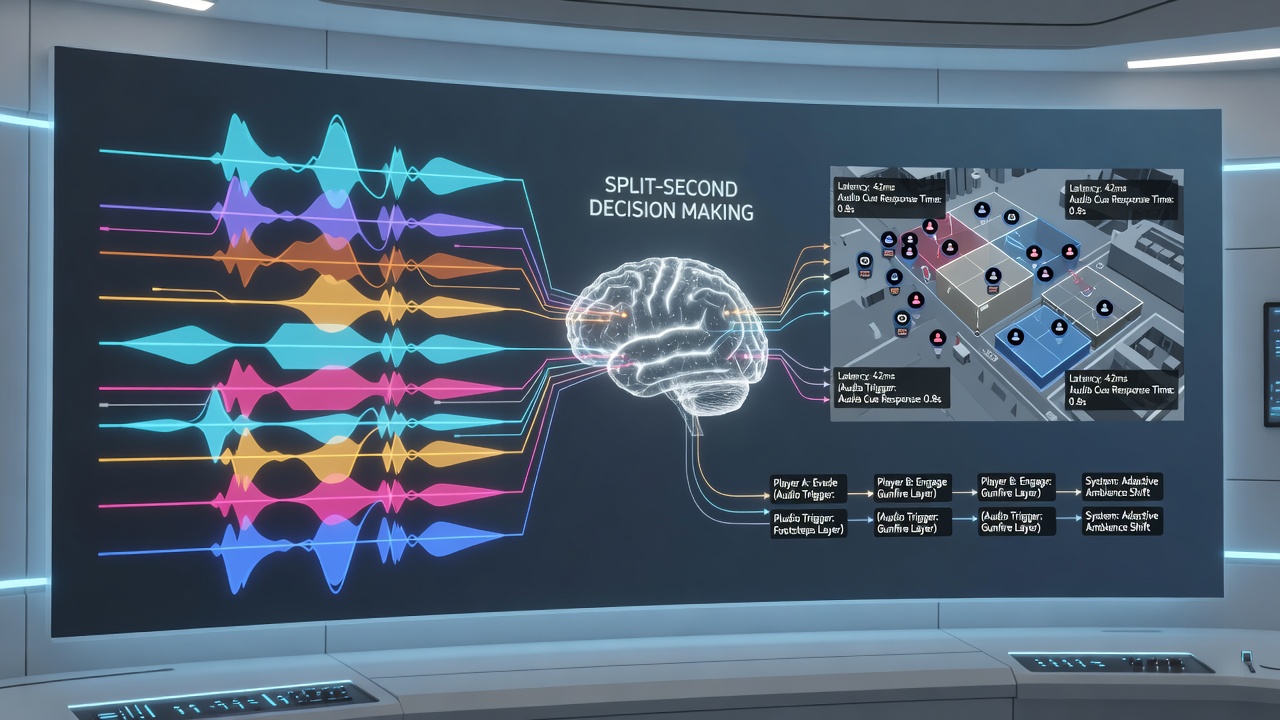
Audio signals reach the brain faster than visual updates in many cases, allowing competitors to register layered changes before fully parsing text or icon feedback. Studies conducted at the University of Toronto tracked reaction latencies and found that participants adjusted strategies 180 milliseconds quicker when distinct audio layers signaled an impending resource shift compared to silent conditions. The layering technique encodes multiple data points simultaneously, such as rising tension through added low-frequency drones paired with high-pitched alerts for critical events, which helps players prioritize actions during their limited decision windows.
Turn-based formats amplify this effect because each participant reviews the full history of opponent moves plus the current audio state before committing. One documented case in a 2024 title showed teams achieving 27 percent higher win rates after audio layering updates that highlighted hidden alliances through subtle motif variations.
Research Findings and Industry Data
Reports from the Interactive Games and Entertainment Association in Australia compiled telemetry from over 1.2 million asynchronous sessions in early 2026 and revealed consistent correlations between audio layer density and decision accuracy. Sessions with four or more active layers produced fewer misreads of opponent intent, while minimal layering increased hesitation periods by up to 650 milliseconds on average. These figures align with observations from Canadian research groups examining cognitive load in turn-based environments.
In August 2026, tournament organizers noted a spike in precision plays following engine patches that refined layering triggers, particularly in regions with higher average ping variability. The adjustments allowed audio cues to compensate for delayed visual synchronization across global player bases.
Academic papers presented at the 2025 Games and Learning Alliance conference further demonstrated that procedural layering reduces reliance on purely visual scanning, freeing attention for strategic calculation during the brief period when players finalize submissions.
Implementation Across Game Genres
Tactical card battlers employ layering to indicate hidden card pools or mana fluctuations through evolving musical themes, whereas base-building simulators use environmental audio shifts to signal supply chain disruptions or incoming threats from distant opponents. Both approaches maintain fairness by processing all prior submissions equally before rendering the next audio state. Developers calibrate layer transitions to avoid abrupt changes that could distract during decision phases, favoring gradual builds that players learn to interpret over repeated matches.
Cross-region data from North American and Asian servers shows similar adoption rates, with audio options expanding in 2025 titles to include customizable intensity levels for accessibility compliance.
Conclusion
Procedural audio layering continues to integrate into asynchronous multiplayer frameworks as a method for conveying complex state information through non-visual channels. Evidence from multiple studies and industry reports confirms measurable impacts on decision timing and accuracy, while implementation details evolve with each generation of audio middleware. Ongoing telemetry collection through 2026 and beyond will likely refine these systems further across diverse competitive formats.