Player-Created Taxonomy Systems for Categorizing Opponent Behaviors in Tactical Online Matches
Written by Frankie Fischer · Jun 30, 2026
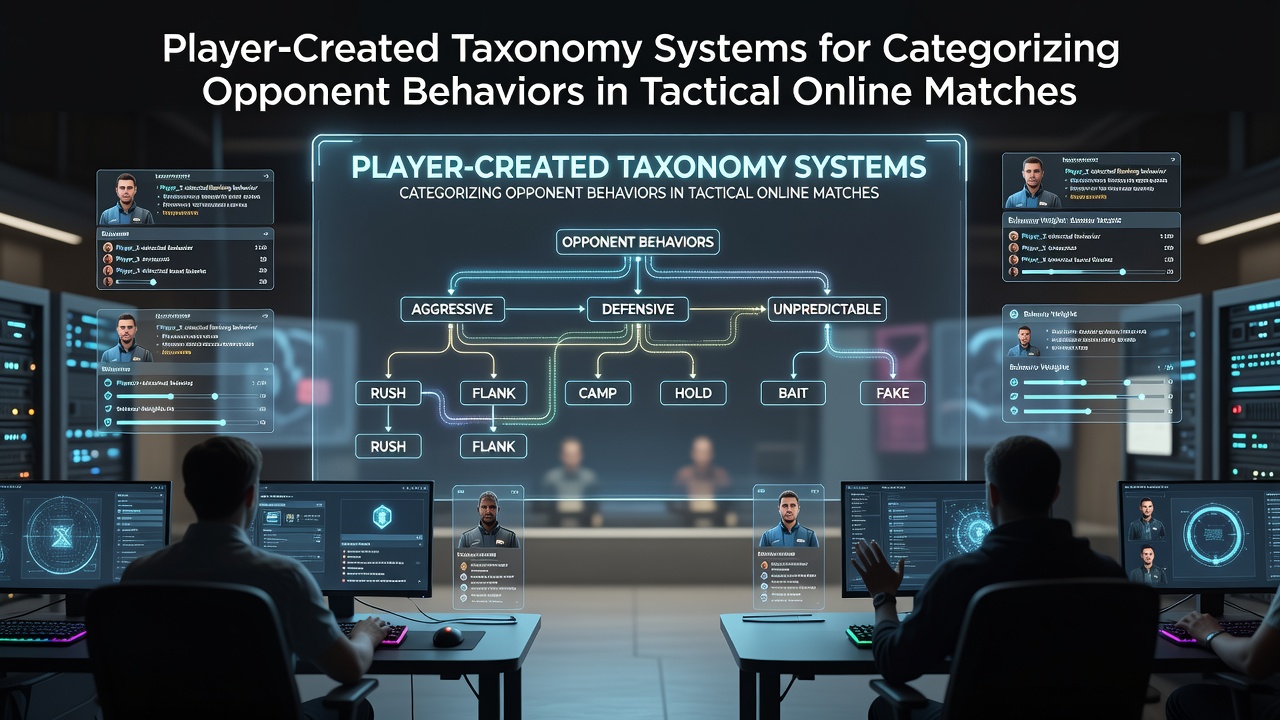
Player-Created Taxonomy Systems for Categorizing Opponent Behaviors in Tactical Online Matches
Communities in tactical online matches have developed structured ways to label and group opponent actions, creating shared vocabularies that help teams anticipate moves during high-stakes rounds. These systems emerge from repeated observations across matches in games such as tactical shooters and real-time strategy titles, where players track patterns like positioning choices, timing of abilities, and responses to pressure. Data from server logs and community forums shows that such taxonomies reduce communication time in voice chats while players coordinate responses.
Origins and Growth of Community-Driven Classifications
Player groups began formalizing behavior categories in the mid-2010s as matchmaking systems brought together strangers with different skill levels and regional styles. Early efforts started in dedicated Discord servers and subreddit threads, where users compiled lists based on match replays. By 2020, these informal notes had expanded into spreadsheets and wikis that tracked hundreds of observed tendencies across thousands of games. Researchers at institutions such as the University of Alberta documented similar community practices in competitive gaming environments, noting that players refined terms through trial and error during live sessions.
Expansion continued as new titles released and older ones received balance updates. Participants in European servers often contributed terms focused on defensive setups, while North American groups emphasized aggressive entry patterns. This geographic variation created overlapping but distinct lexicons that later merged through cross-region tournaments. In June 2026, several major titles introduced API access for replay data, allowing automated tools to tag matches with community-defined labels at scale.
Core Categories and Their Applications
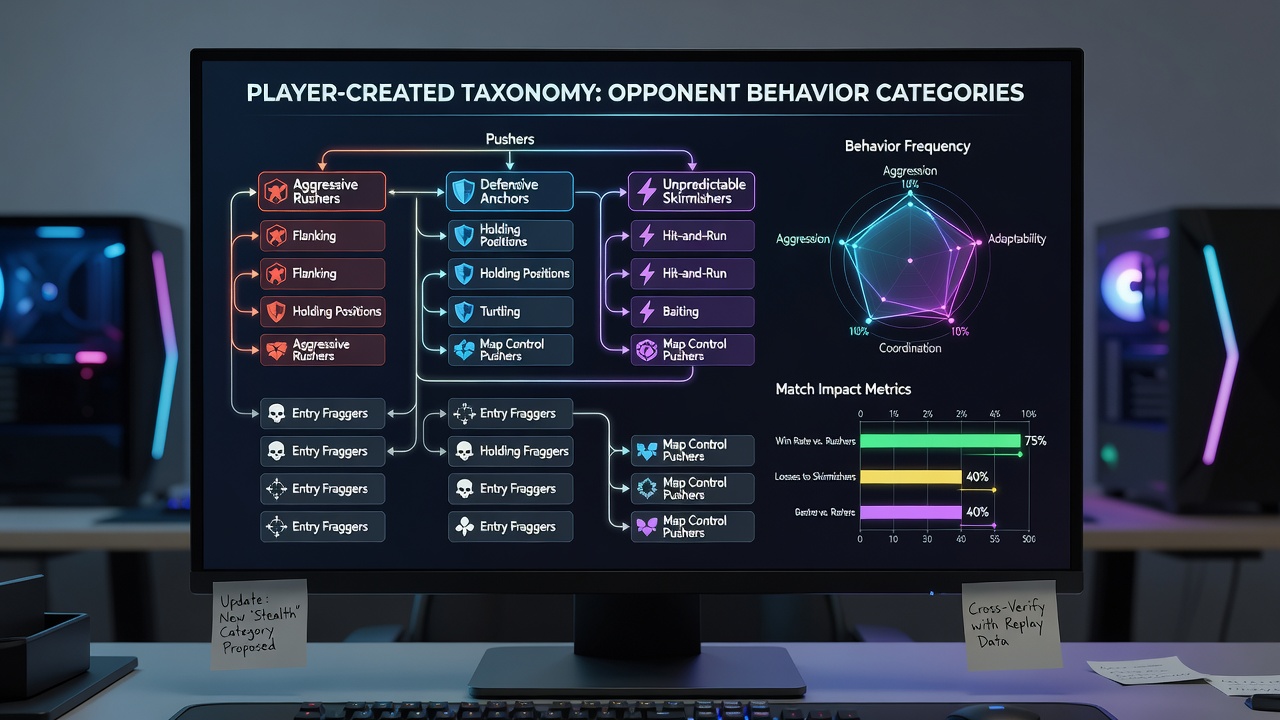
Taxonomies typically divide behaviors into clusters based on observable metrics such as movement speed, ability usage frequency, and reaction windows. Common groupings include rush-oriented profiles that prioritize early map control, passive setups that favor information gathering, and adaptive styles that shift based on team composition. Players assign these labels after the first few rounds, then adjust strategies accordingly during the match.
Teams apply these labels to plan utility usage and rotation timing. A player identified as favoring wide swings might prompt teammates to pre-aim common angles, whereas one tagged for slow plays could lead to delayed executes. Community-maintained databases on platforms like Overwolf extensions allow real-time lookup during queues, pulling from aggregated match histories. Figures from industry reports by the International Game Developers Association indicate that organized groups using shared taxonomies report higher win rates in ranked ladders compared to solo players relying on individual memory alone.
Tools and Platforms Supporting Taxonomy Development
Spreadsheets and custom bots form the backbone of most systems, with volunteers updating entries after each patch cycle. Tools scrape public match data from official APIs and apply machine learning models trained on labeled replays to suggest new categories. Academic studies from research groups in Australia have examined how these tools evolve, finding that community feedback loops accelerate the addition of edge-case behaviors that developers overlook in official analytics.
Integration with voice communication software lets teams call out labels instantly, triggering pre-set strategy prompts on shared overlays. Some groups maintain version-controlled repositories on GitHub, where contributors propose additions through pull requests reviewed by veteran players. This process mirrors open-source software development and keeps taxonomies current with meta shifts.
Effects on Team Coordination and Match Outcomes
Adoption of these systems alters how strangers form temporary alliances during limited-time events and ranked sessions. Quick label assignment allows squads to bypass lengthy explanations and focus on execution. Data collected by the Entertainment Software Association shows increased retention among players who participate in taxonomy communities, as shared knowledge fosters a sense of collective expertise.
Yet mismatches occur when one side uses a different set of definitions, leading to miscommunications that opponents exploit. Cross-community tournaments have prompted efforts to standardize core terms while preserving regional variations. Observers note that successful teams treat taxonomies as living documents, revising entries after major content drops rather than treating them as fixed rules.
Conclusion
Player-created taxonomy systems continue to shape tactical online matches by turning scattered observations into actionable frameworks. As tools improve and data access expands, these classifications will likely incorporate more granular details from larger datasets. Communities maintain the systems through ongoing contributions, ensuring relevance across evolving game landscapes and player bases.