Screenshot Archaeology: Revealing Unintended Mechanics Through Shared Visual Records in Exploration Games
Written by Jordan Keller · Jun 23, 2026
Screenshot Archaeology: Revealing Unintended Mechanics Through Shared Visual Records in Exploration Games
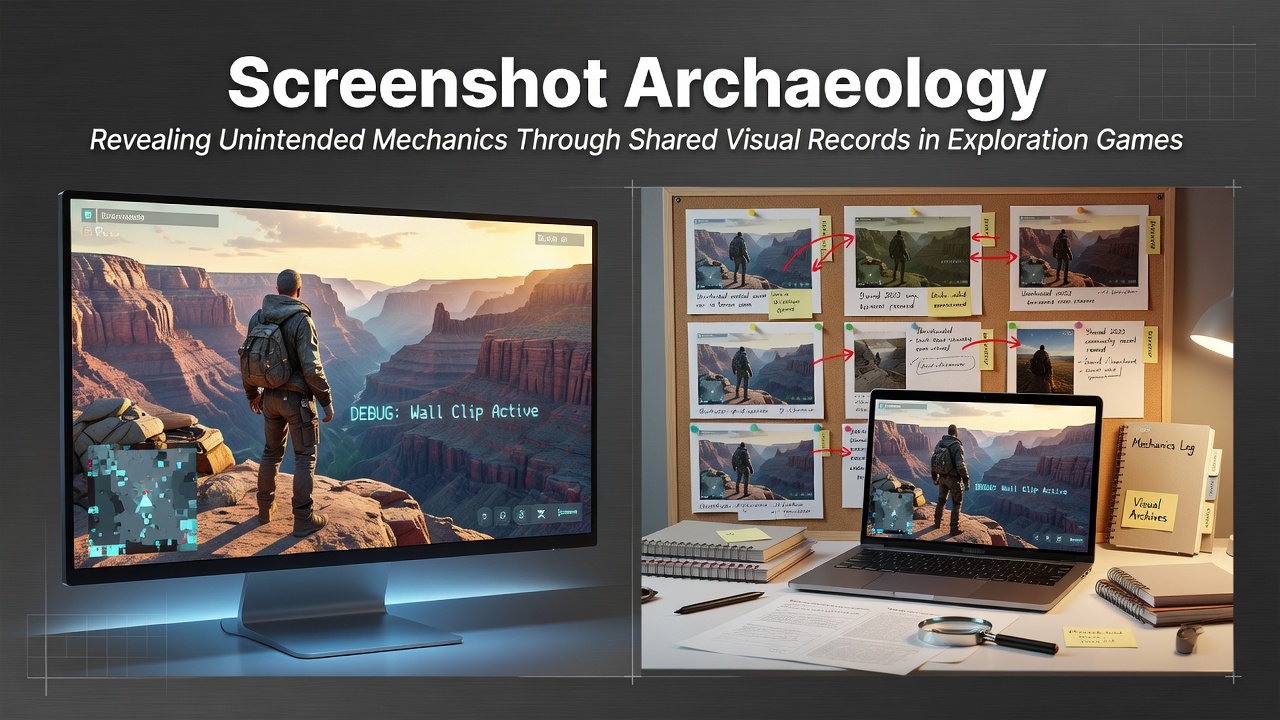
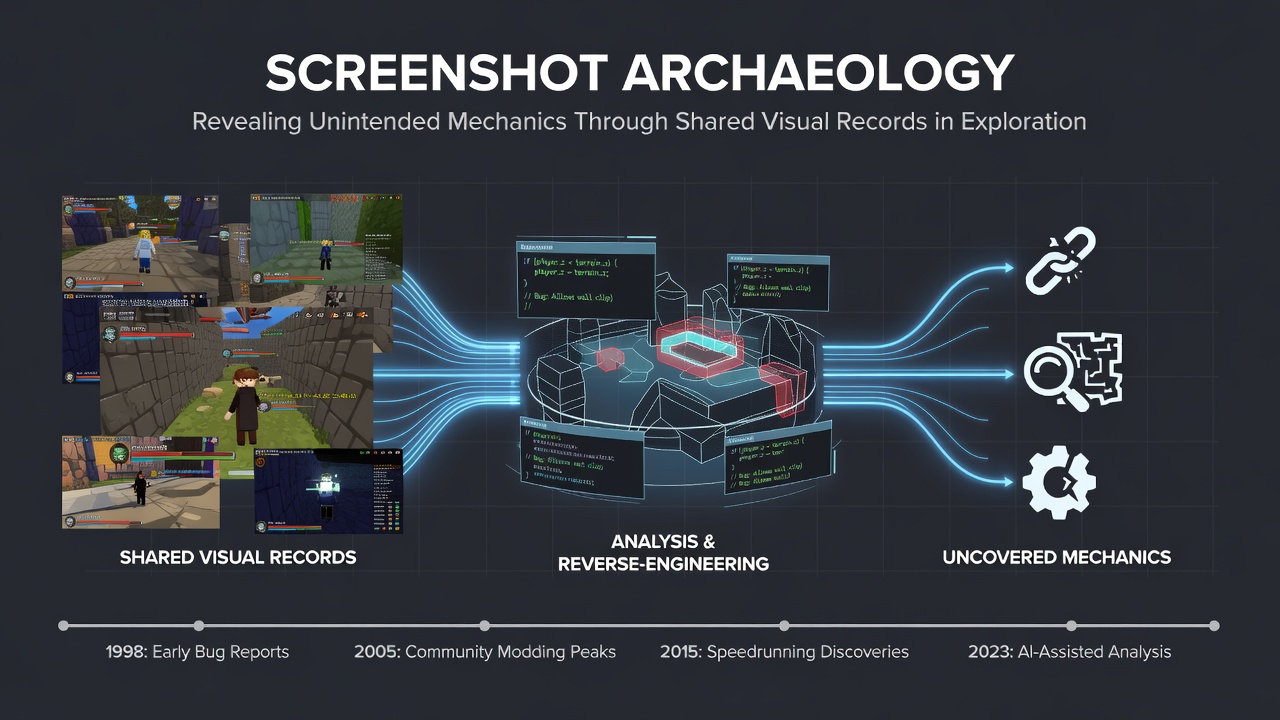
Exploration games generate vast amounts of visual data through player interactions, and communities have developed systematic approaches to examining shared screenshots for clues about game systems that developers did not explicitly document. Players capture images during normal gameplay sessions, then upload them to forums, Discord servers, and dedicated wikis where others review the frames for inconsistencies in lighting, geometry, or object placement that suggest underlying code behaviors.
Methods of Visual Analysis in Player Communities
Community members compare multiple screenshots taken at similar locations across different sessions, noting variations in environmental responses that occur under specific conditions such as time of day changes or inventory configurations. This comparative process reveals patterns like texture pop-in sequences that allow temporary access to otherwise restricted zones or collision detection edges that permit unintended movement paths. Researchers studying player data collection practices have documented how these visual archives grow over months of coordinated sharing, creating datasets that exceed the detail level of official patch notes in many cases.
Tools for image comparison, including side-by-side viewers and metadata extractors, help isolate frame elements such as particle effects or shadow calculations that indicate hidden variables in simulation engines. Participants often annotate images with timestamps and coordinate data before posting them, which allows subsequent viewers to recreate conditions and verify observations without relying solely on memory of individual playthroughs.
Case Examples from Major Titles
In games featuring procedurally assisted worlds, screenshot collections have exposed layering issues where distant terrain meshes intersect with foreground objects in ways that create functional shortcuts. One documented instance involved a desert region where repeated captures showed sand dune shifts aligning with specific wind simulation cycles, enabling players to map temporary elevation changes that facilitated faster traversal routes. Similar findings emerged in underwater exploration titles where light refraction patterns visible in screenshots indicated fluid dynamics boundaries not listed in developer tooltips.
Communities focused on open-ended survival experiences have used shared imagery to track creature behavior triggers that activate only when certain environmental objects remain undisturbed for precise durations. These observations, compiled from hundreds of individual captures, demonstrate how visual records capture edge cases that occur infrequently during standard play sessions yet produce consistent mechanical outcomes once identified.
Role of Archival Platforms and Data Sharing
Dedicated archiving sites maintain chronological collections of screenshots tagged by game version and region, which supports longitudinal studies of how mechanics evolve after updates. According to reports from the Entertainment Software Association, player-generated visual content contributes substantially to post-release discovery processes in genres emphasizing discovery and navigation. These platforms incorporate search functions that filter images by elements such as color palettes or object density, streamlining the identification of anomalies across large repositories.
Cross-referencing occurs frequently between different exploration titles when visual similarities suggest shared engine components or design philosophies. Analysts note that patterns observed in one game sometimes predict comparable behaviors in another, prompting targeted screenshot campaigns that confirm or refute hypotheses within days of initial speculation.
Integration with Development Feedback Loops
Developers have incorporated community screenshot archives into internal testing protocols, using player-identified visual markers to prioritize bug reports that might otherwise require extensive manual reproduction efforts. Data from the Digital Games Research Association indicates that visual evidence submitted by players accelerates the resolution of edge-case issues in simulation systems. In June 2026, several studios announced expanded programs that accept annotated image submissions directly through official support portals, formalizing a practice that previously operated entirely through unofficial channels.
Version control systems employed by development teams now include modules for importing external image sets, allowing direct comparison against internal build records to determine when specific visual states first appeared in released software. This approach has proven effective for isolating changes introduced during content updates that inadvertently altered core movement or interaction systems.
Conclusion
Screenshot archaeology continues to function as a distributed research method within exploration game communities, converting individual visual captures into collective knowledge about system behaviors. The practice relies on consistent documentation standards and collaborative verification processes that produce reliable insights into game mechanics across multiple titles and update cycles. As archival tools and sharing platforms evolve, the volume and precision of these visual datasets support ongoing examination of both intended and emergent features in digital environments.