The Ripple Effects of Cosmetic Customization on Social Hierarchies in Persistent Virtual Societies
Written by Jordan Keller · Jul 23, 2026
The Ripple Effects of Cosmetic Customization on Social Hierarchies in Persistent Virtual Societies
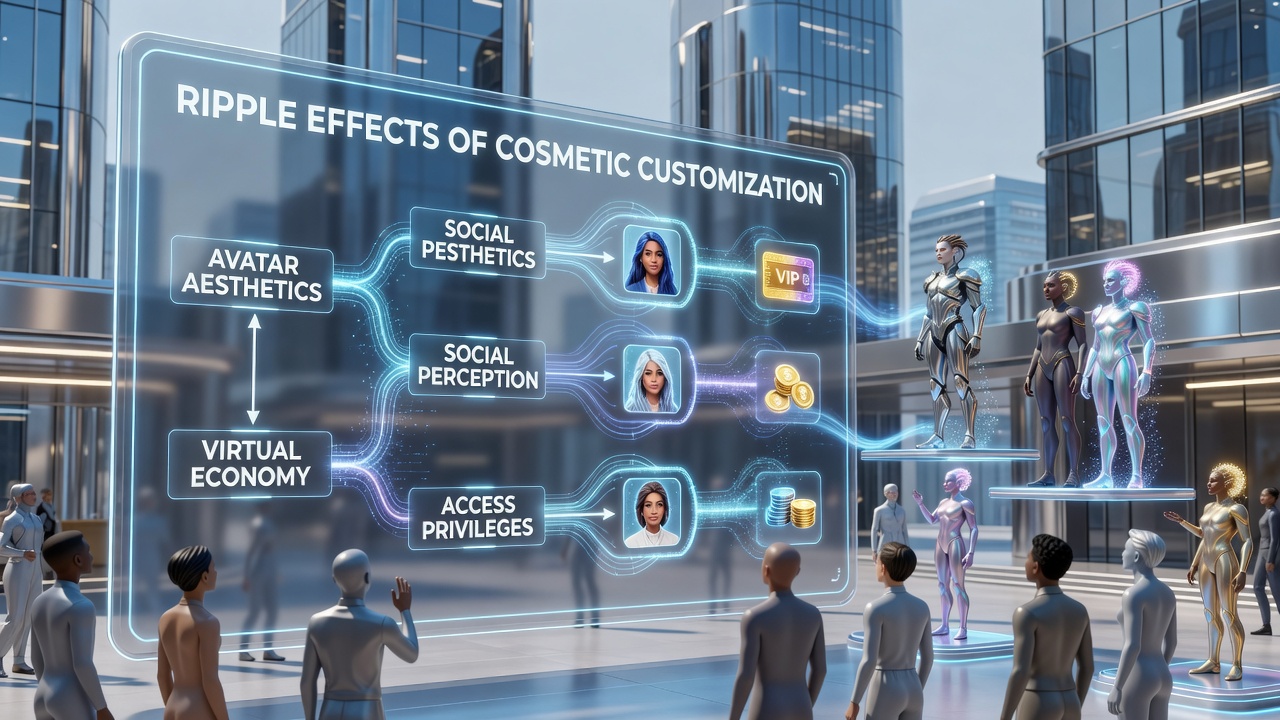
Persistent virtual societies continue to evolve as platforms where cosmetic customization shapes interactions and group formations among participants, with data from multiple studies revealing patterns that extend across years of server activity. Researchers at institutions tracking player behavior note that items like unique skins, mounts, and visual effects often serve as visible markers that influence how communities organize themselves, and this process gained fresh attention during industry discussions held in July 2026 when new analytics from long-running titles were presented at global gaming forums. Those who've examined server logs find that players equipped with limited-edition cosmetics frequently receive faster responses in group formations, while others without such markers report delays in joining high-level activities.
Status Signals Through Visual Layers
Cosmetic options introduced in major updates create layers of distinction because rare appearances stand out in crowded hubs, and observers note that this visibility encourages the formation of subgroups that prioritize matching aesthetics over skill metrics alone. According to findings shared by the Interactive Software Federation of Europe, servers hosting millions of active accounts show measurable clustering where participants with coordinated cosmetic sets occupy central social spaces more often than those relying on default appearances. This pattern holds across titles that maintain persistent economies, where trading systems allow transfer of these items and thereby reinforce access barriers for newer arrivals.
Take one researcher who tracked avatar movements in a popular fantasy MMO over a twelve-month period and discovered that individuals sporting event-exclusive particle effects joined raid parties at rates thirty percent higher than average, while standard-looking characters waited longer in queues. The same study linked these trends to broader shifts because cosmetic availability often ties into seasonal events that reset hierarchies each cycle, yet carryover prestige from prior seasons persists in memory among veteran players.
Economic Flows and Access Patterns
Markets for cosmetic items operate as secondary economies that intersect with social standing, since prices for desirable appearances fluctuate based on supply and community demand, and figures from industry reports indicate that top-tier customizations can command values equivalent to weeks of in-game currency farming. Players without financial or time resources to acquire them encounter reduced mobility through social networks, which in turn affects participation in collaborative content that requires coordinated teams. Data compiled by the Canadian Digital Media Research Network reveals similar dynamics in cross-platform environments, where cosmetic scarcity correlates with slower integration of new accounts into established circles during the first three months of activity.
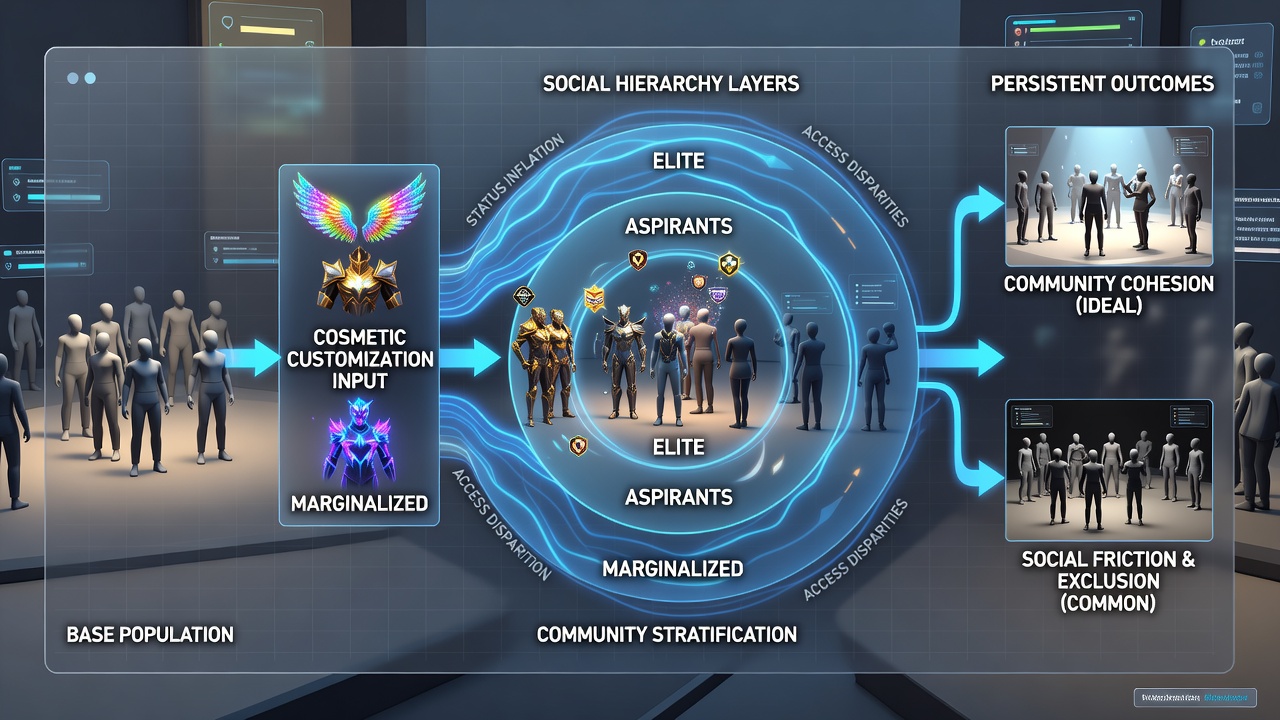
Yet the introduction of account-bound cosmetics in several 2025 expansions altered some of these flows because binding mechanics reduced resale potential and shifted focus toward personal collection goals rather than pure trading status. Observers tracking these changes note that communities adapted by creating new ranking systems based on completion of achievement-linked appearances, which maintained hierarchical elements even as traditional markets cooled. This adjustment became especially evident after July 2026 patches that added shared wardrobe systems across multiple servers.
Community Responses and Adaptation Strategies
Player groups respond to these visual cues with varying tactics, from organized events that celebrate rare finds to informal exclusion practices documented in chat logs and forum archives. Researchers examining behavioral logs find that guilds sometimes list cosmetic requirements in recruitment posts, and this practice appears more frequently in titles with deep customization trees. Those studying long-term server health report that such filters contribute to player retention differences, where accounts matching the dominant aesthetic stay active longer on average.
Additional layers emerge when developers release cross-game cosmetic transfers, because continuity of appearance across separate persistent worlds amplifies existing prestige for dedicated collectors. Reports compiled through academic partnerships highlight cases where players leveraged early access to limited sets to establish themselves as trendsetters, and subsequent followers replicated those styles to gain entry into the same circles. The resulting feedback loop sustains the hierarchy while also generating content for community showcases that further publicize top appearances.
Long-Term Structural Impacts
Over multiple years the cumulative effect of cosmetic systems extends into governance elements within virtual societies, as participants with prominent customizations often receive invitations to beta tests or developer feedback sessions according to participation metrics released by several studios. This creates pathways for influence that extend beyond gameplay into decisions about future content directions. Studies conducted on servers that have run continuously since 2018 show that cosmetic-based status tends to compound with other factors like playtime totals, producing entrenched positions that newer entrants must navigate through extended effort or alternative social routes.
What's interesting is how temporary events can temporarily flatten some distinctions when free cosmetic grants reach wider audiences, yet the core hierarchy reasserts itself once exclusivity returns in following cycles. Data collected across regions indicates these fluctuations follow predictable rhythms tied to update schedules, allowing analysts to forecast periods of heightened social mobility versus consolidation.
Conclusion
The documented patterns demonstrate that cosmetic customization functions as an ongoing mechanism within persistent virtual societies, where visual distinctions interact with economic systems and group behaviors to sustain layered social structures. Continued monitoring by research networks and industry bodies provides ongoing data points that track how these dynamics shift with each new feature rollout, offering clear records of adaptation across diverse player populations.