Tracing Behavioral Cues in NPC Dialogue Trees That Reveal Alternate Quest Paths in Narrative RPGs
Written by Zara Braun · Aug 11, 2026
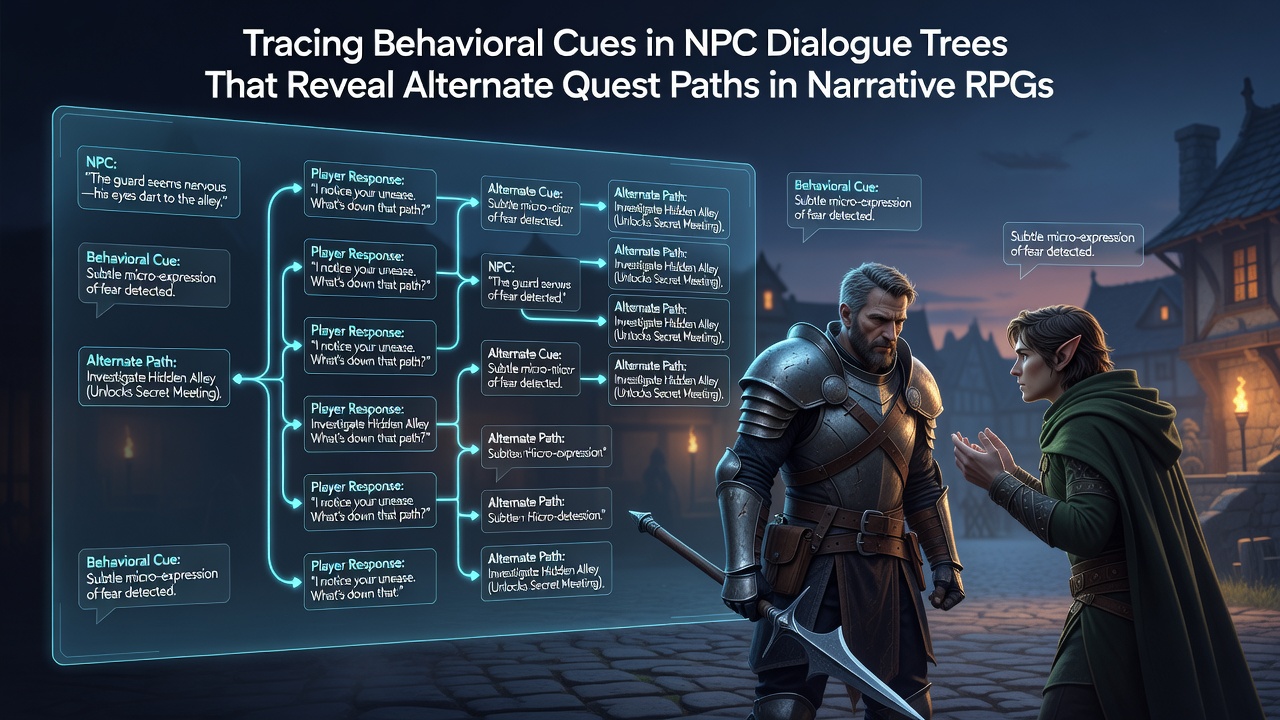
Tracing Behavioral Cues in NPC Dialogue Trees That Reveal Alternate Quest Paths in Narrative RPGs
Developers design narrative RPGs with dialogue trees that contain layered options where small shifts in NPC tone, word repetition, or conditional responses signal hidden branches leading to alternate quests, and players who track these patterns unlock content that remains invisible during standard playthroughs.
Behavioral cues often appear through repeated references to past events, sudden changes in an NPC's willingness to share information after specific prior choices, or micro-expressions coded into character animations that accompany certain lines of text.
How Dialogue Trees Encode Hidden Paths
Modern narrative RPGs build dialogue systems as interconnected nodes where each response can alter future availability of lines based on accumulated flags from earlier interactions, and researchers at institutions like the University of Alberta have documented how these systems track variables such as trust levels or knowledge states without displaying them directly to the player.
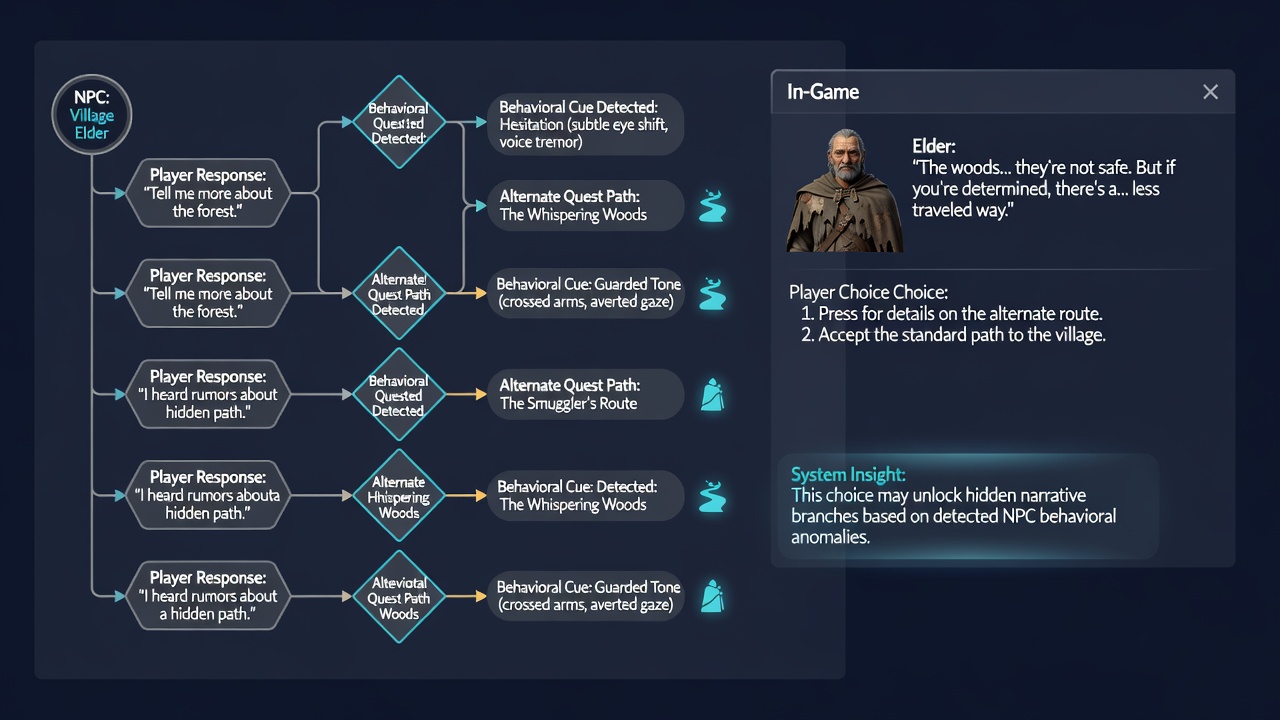
One common cue involves an NPC hesitating or redirecting a conversation topic after the player has completed a related side activity, which opens a new quest line only if the player selects a follow-up prompt that references the hesitation itself.
Recognizing Patterns Across Multiple NPCs
Players frequently discover alternate paths by comparing dialogue consistency between several characters in the same region, since changes in one NPC's responses after an interaction with another often indicate a chain of conditional triggers that lead to a larger quest arc.
Studies from the Entertainment Software Association show that titles released between 2023 and 2025 increased the average number of conditional dialogue nodes by 40 percent compared with earlier generations, making systematic observation of behavioral shifts more necessary for full exploration.
Turns out that audio cues such as lowered voice volume or background sound changes during specific lines also function as reliable indicators, although these remain harder to document without repeated play sessions.
Case Examples from Recent Releases
In several open-world RPGs updated during summer 2025 and continuing into August 2026 patches, developers added new dialogue variants triggered only after players collected scattered environmental notes that altered an NPC's memory state, and community wikis compiled these changes into searchable databases that map cue-to-outcome relationships.
Those who study player forums note that groups in European and Australian servers share spreadsheets tracking dialogue flag changes across difficulty settings, revealing that certain behavioral cues appear more frequently on higher difficulty tiers where NPC responses adapt based on player reputation scores.
Tools and Methods Players Employ
Community tools now include browser extensions that log dialogue options across multiple saves, allowing users to compare trees side by side and identify which responses introduce new quest flags without requiring full replays of lengthy campaigns.
According to reports from the Interactive Games and Entertainment Association in Australia, organized player groups have reduced average discovery time for hidden quest branches by coordinating observations across servers, turning individual cue hunting into collaborative data collection efforts.
And because many games now support multiple concurrent playthroughs through cloud saves, observers can test how small variations in early dialogue choices propagate through later NPC interactions to unlock divergent quest lines.
Conclusion
Tracing behavioral cues within NPC dialogue trees has become a documented technique within narrative RPG communities, supported by growing volumes of player-collected data and developer updates that continue to expand conditional branching mechanics through 2026.