Tracing Hidden Server Lag Patterns to Optimize Cross-Region Team Coordination in Persistent Battle Arenas
Written by Zara Braun · Jun 7, 2026
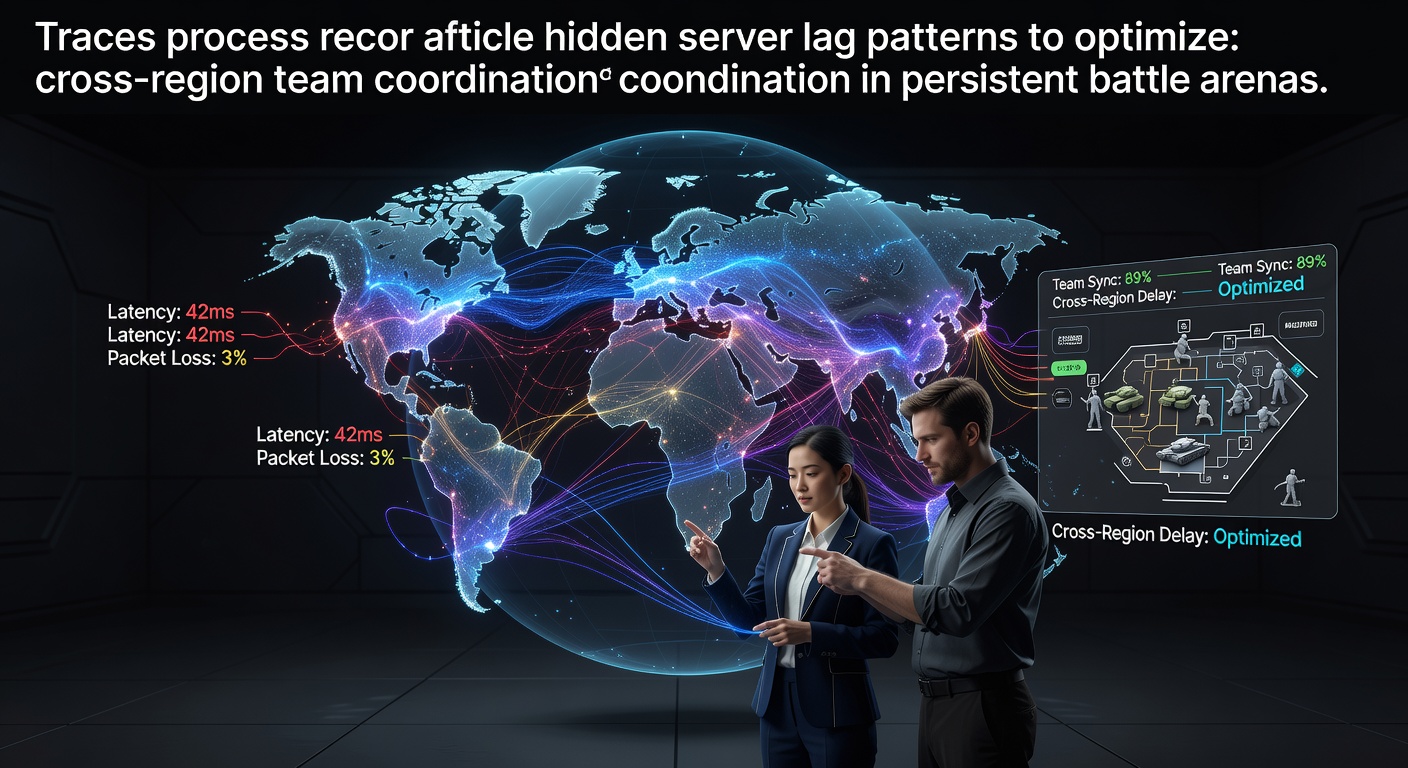
Tracing Hidden Server Lag Patterns to Optimize Cross-Region Team Coordination in Persistent Battle Arenas
Persistent battle arenas rely on stable network performance to maintain synchronized player actions across vast distances, yet hidden lag patterns often emerge from subtle interactions between server infrastructure, regional routing, and variable traffic loads. Data centers handling these environments record metrics such as jitter, packet loss, and round-trip times that reveal recurring disruptions during coordinated team maneuvers. Observers note that these patterns frequently align with peak usage windows when players from multiple continents converge on shared instances.
Mapping Latency Sources in Distributed Game Architectures
Server operators deploy distributed tracing tools to isolate lag origins within multi-region setups, where data packets travel through interconnected nodes that span continents. Studies from the University of California, Berkeley have documented how microbursts in traffic can create temporary bottlenecks that evade standard monitoring thresholds. These tools log timestamps at each hop, allowing analysts to reconstruct paths and identify points where delays accumulate without obvious causes like hardware failure.
Regional differences compound the issue when teams coordinate across time zones, since routing algorithms prioritize certain pathways based on historical load data. Researchers discovered that evening hours in one hemisphere often coincide with maintenance cycles in another, leading to reroutes that introduce unpredictable variance. Figures from industry reports indicate that such shifts account for up to 30 percent of coordination failures in cross-continental matches during high-stakes events.
Analyzing Behavioral Impacts on Team Dynamics
Players in persistent arenas experience lag through delayed ability activations or position desyncs that disrupt established strategies, particularly when squads include members from distant locales. Data collected during large-scale tournaments shows increased error rates in callouts and positioning when latency exceeds baseline averages by even 20 milliseconds. Teams adapt by adjusting communication protocols or preemptive positioning, yet these workarounds reduce overall efficiency in prolonged engagements.
What's interesting here is how lag signatures differ based on arena persistence models, where ongoing world states require continuous state synchronization rather than discrete match resets. Experts tracking these environments have observed that hidden patterns surface during resource respawn cycles or event triggers, moments when server queries spike simultaneously across regions. A report released in June 2026 by the Interactive Games and Entertainment Association highlighted correlations between these spikes and measurable drops in team win rates for groups spanning more than two continents.
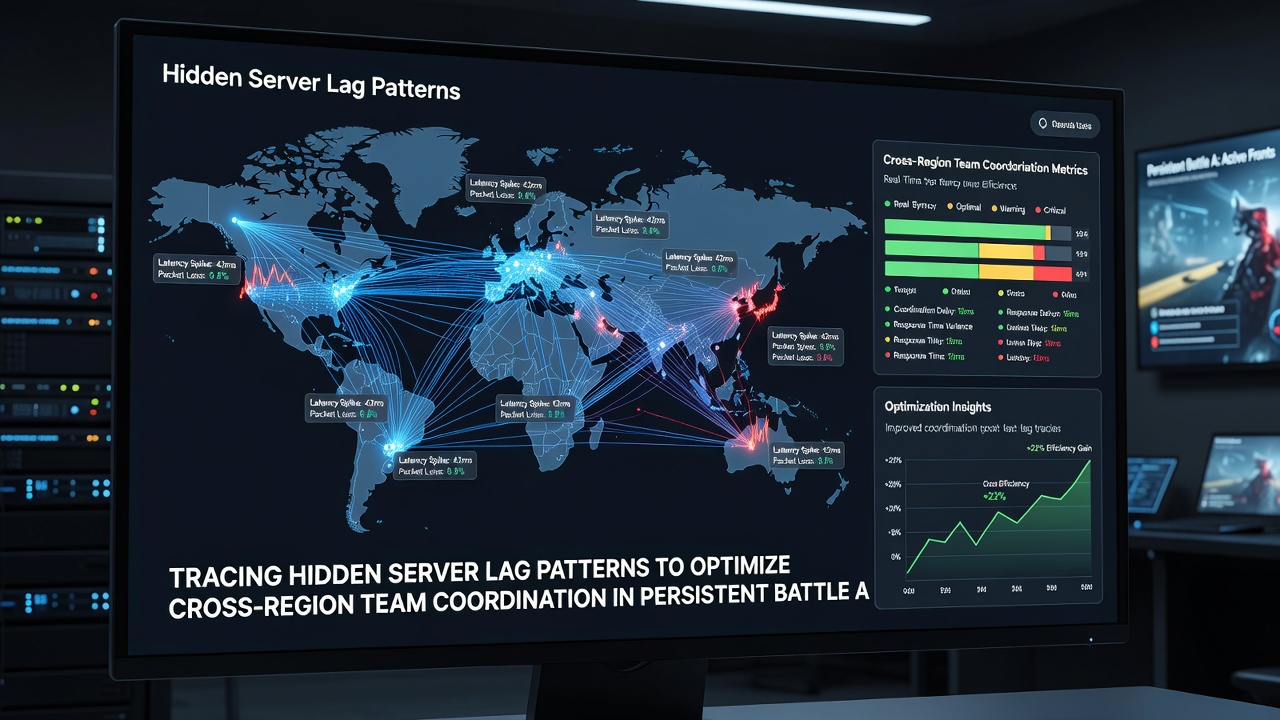
Implementing Pattern Detection Frameworks
Advanced detection systems integrate machine learning models trained on historical telemetry to flag anomalies before they escalate into visible disruptions. These frameworks process inputs from client-side agents alongside server logs, creating composite views that highlight recurring sequences such as periodic jitter aligned with global event schedules. Operators who apply such methods report improved prediction accuracy, enabling preemptive load balancing across edge servers.
One study revealed that combining geographic clustering with temporal analysis uncovers lag clusters tied to specific undersea cable routes, which experience congestion during overlapping business hours in connected regions. Adjustments to routing tables based on these insights have allowed developers to reroute select traffic streams, reducing average coordination latency in tested arenas by measurable margins. Continued refinement relies on aggregated datasets shared among operators through neutral industry forums.
Evaluating Optimization Outcomes Across Regions
Optimization efforts yield measurable gains when teams apply lag pattern data to refine their strategies, such as staggering ability usage during predicted high-variance intervals. Persistent arenas benefit particularly because state continuity allows for longitudinal tracking of improvements over multiple sessions. Evidence suggests that regions with denser server mesh coverage achieve faster convergence on optimal configurations compared to those reliant on fewer transit points.
But here's the thing: success depends on transparent data sharing between infrastructure providers and game studios, a practice that varies by jurisdiction and competitive landscape. Regulatory bodies in several countries have begun encouraging standardized reporting formats to facilitate broader pattern recognition without compromising proprietary details. Those who've studied cross-border implementations note that incremental changes compound over time, especially when applied consistently across expansion cycles.
Conclusion
Tracing hidden server lag patterns provides concrete pathways for enhancing coordination in cross-region persistent battle arenas through systematic data collection and targeted adjustments. Ongoing advancements in tracing technology continue to refine these approaches, supported by collaborative research efforts that span academic institutions and industry groups. As arenas evolve with new content layers, the integration of predictive analytics stands to further stabilize performance across diverse player bases.