Tracking Behavioral Shifts in Player Communities After Major Content Expansions in Persistent Online Worlds
Written by Zara Braun · Jun 4, 2026
Tracking Behavioral Shifts in Player Communities After Major Content Expansions in Persistent Online Worlds
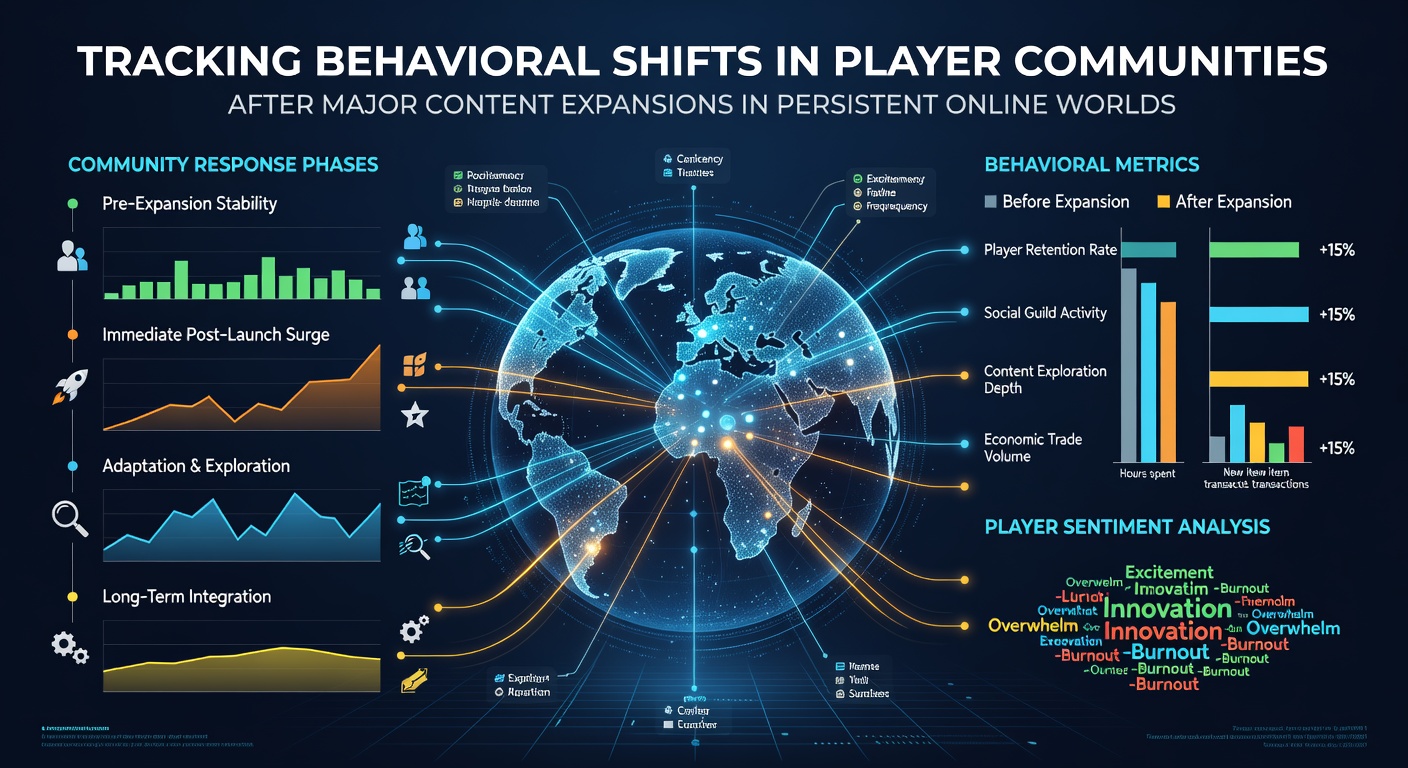
Persistent online worlds experience measurable changes in player behavior following major content expansions, and analysts track these patterns through login data, chat logs, trade volumes, and group formation rates. Researchers monitor how communities reorganize themselves when new zones, mechanics, and rewards enter established ecosystems, and studies document shifts that begin within hours of deployment and evolve over subsequent weeks.
Early Activity Surges and Resource Allocation
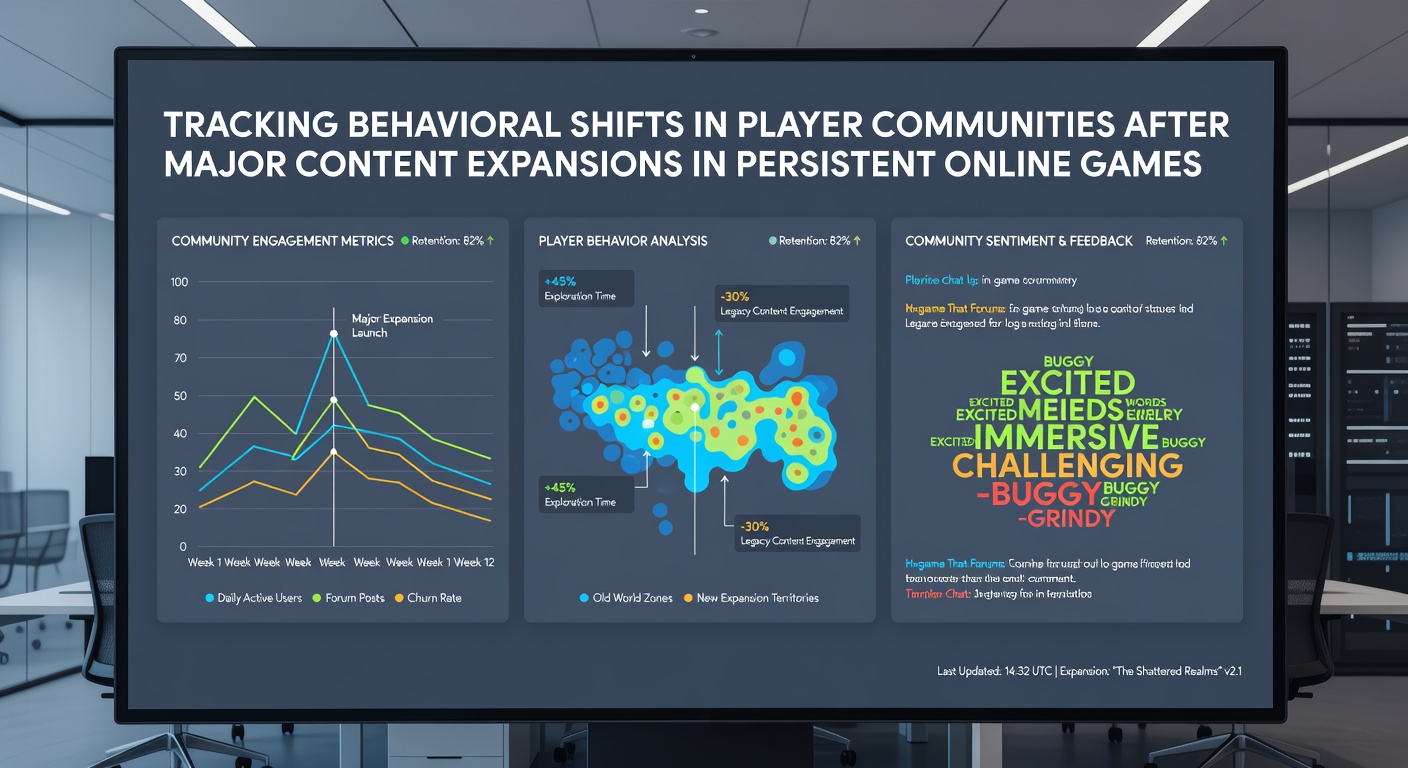
Server metrics reveal sharp increases in concurrent users immediately after launch, with many players focusing first on new progression systems while others revisit older content to prepare for upcoming challenges. Trade networks adjust rapidly as fresh materials flood markets, and observers note temporary imbalances in supply and demand that resolve once crafting loops stabilize. In June 2026 several persistent titles released expansions within the same two-week window, and aggregated telemetry from multiple regions showed peak login durations extending by 40 percent compared with baseline weeks.
Social Reconfiguration Within Guilds and Ad Hoc Groups
Group dynamics often realign around specialized roles introduced by new content, prompting veterans to recruit for specific skill sets while newer participants seek guidance on unfamiliar encounters. Chat channel activity rises as players coordinate farming routes and share discovery notes, yet established hierarchies sometimes fracture when leadership disagrees on optimal strategies for the expanded content. One longitudinal project conducted by researchers at the University of Melbourne examined guild membership turnover across three titles and found that 62 percent of tracked groups experienced at least one leadership change within 30 days of an expansion.
Economic Ripple Effects Across Auction Houses and Player Markets
Currency circulation accelerates as players liquidate older gear to fund new acquisitions, and price fluctuations appear first in high-demand consumables before spreading to niche items. Data collected by the Interactive Games & Entertainment Association in Australia indicates that average transaction values in monitored economies rose by 28 percent during the first month after comparable updates, with regional variations tied to time-zone overlap and population density.
Secondary markets for cosmetic and convenience items also register distinct spikes, although volume normalizes faster than core progression goods. Players who specialize in market speculation frequently alter their inventory strategies once they identify which new resources will retain value longest, and automated tracking tools capture these adjustments through repeated snapshots of listing patterns.
Exploration Patterns and Zone Population Distribution
Heatmap analysis demonstrates that newly added areas draw concentrated populations for the initial two to three weeks, after which players disperse according to efficiency calculations and daily quest availability. Older zones sometimes experience renewed traffic when expansions introduce mechanics that reward revisiting prior locations, and community-driven mapping projects document these secondary migrations with timestamped screenshots and route logs. Those who study movement data note that flight paths and fast-travel nodes become critical bottlenecks during the first surge, prompting temporary adjustments in how groups schedule their sessions.
Longer-Term Retention and Community Fragmentation
Retention curves typically plateau after the novelty period, yet subsets of the population maintain elevated engagement when new systems integrate deeply with existing progression. Some communities splinter into specialized subgroups focused on endgame optimization while others consolidate around casual or role-playing priorities, and cross-server data reveals modest migration rates as players seek environments that match their preferred pace. Academic teams continue to refine models that predict these outcomes by correlating expansion size, reward structure, and pre-existing social density.
Conclusion
Tracking behavioral shifts after major content expansions provides clear indicators of how persistent online worlds adapt at both individual and collective levels. Server-side telemetry combined with qualitative observation yields consistent patterns across titles, and organizations such as the Interactive Games & Entertainment Association continue to refine measurement frameworks that capture these dynamics. As expansions recur, the accumulated datasets allow more precise forecasting of community responses and resource flows.