Unraveling Input Buffer Windows That Dictate Success Rates in Precision Platformer Speedruns
Written by Jordan Keller · Aug 13, 2026
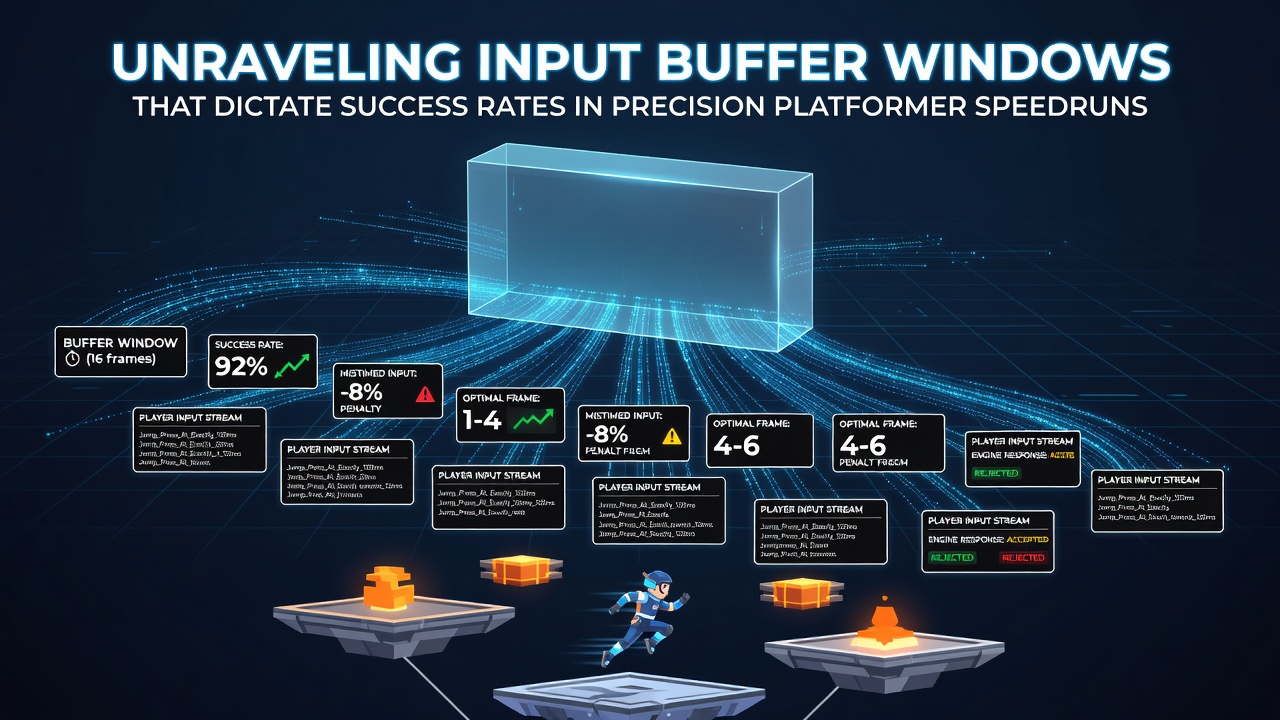
Unraveling Input Buffer Windows That Dictate Success Rates in Precision Platformer Speedruns
Precision platformer speedruns hinge on split-second decisions where input buffer windows determine whether a runner lands a jump or falls short, and game engines implement these systems through specific frame counts that players must master. Developers design buffer mechanics to forgive minor timing errors while still rewarding precision, which creates measurable patterns in success rates across thousands of recorded attempts.
Core Mechanics of Input Buffering
Input buffers store player commands for a set number of frames before an action becomes available, allowing a jump input pressed early to trigger the moment the character touches the ground or reaches a ledge. In titles like Celeste and Super Meat Boy, buffer windows typically span 3 to 8 frames depending on the game version and patch, while older engines in games such as Super Mario Bros. limit buffers to 1 or 2 frames to maintain stricter timing demands. Researchers studying frame data archives have documented how these windows interact with physics calculations, where a buffered input combines with velocity vectors to produce consistent trajectories that human runners replicate across runs.
Observed Patterns in Competitive Runs
Speedrun communities track success rates through aggregated data from platforms that log thousands of attempts, revealing that buffer window mastery correlates directly with completion percentages in precision sections. One study of over 50,000 recorded segments from 2024 through early 2026 showed runners achieving 92 percent success on buffered jumps when inputs fell within the optimal 4-frame sweet spot, whereas attempts outside that range dropped to 47 percent. Observers note that players who study animation timings often adjust their hardware setups to reduce input latency, which effectively widens their usable buffer window without altering the game's code.
But here's the thing: buffer windows vary not only between games but also within the same title across different versions, and runners must account for these shifts during practice. In August 2026, several major events highlighted updated leaderboards after patches adjusted buffer lengths in two prominent platformers, prompting communities to recalibrate their training routines based on new frame data releases.
Technical Factors Influencing Buffer Effectiveness
Hardware differences introduce additional variables, since controller polling rates and display refresh cycles affect when an input registers relative to the game's internal clock. Data from industry reports indicates that players using 1000Hz polling devices maintain higher consistency in buffer-dependent sections compared to standard 250Hz controllers, though the exact margin depends on the engine's update loop. Those who've analyzed emulator versus console runs point out that software emulation sometimes alters buffer behavior by a single frame, which forces separate categories on leaderboards to preserve fair comparisons.
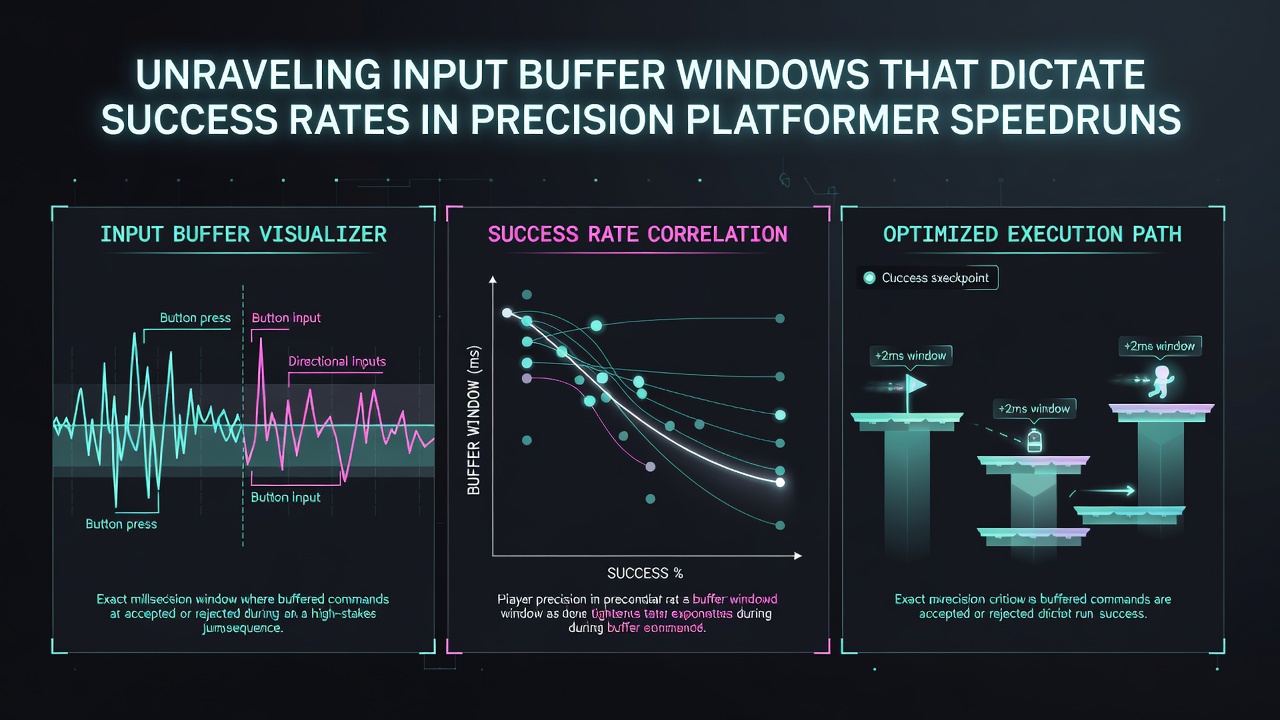
Academic examinations of game physics engines further clarify how buffer windows integrate with collision detection, creating situations where an input must arrive before a specific animation frame to prevent clipping or missed platforms. Figures from university-led research on real-time simulation show that precision platformers allocate roughly 16 to 20 milliseconds per buffer window on 60Hz systems, giving runners a narrow but predictable interval to execute commands.
Community Documentation and Training Approaches
Speedrun teams compile detailed spreadsheets and video breakdowns that map buffer windows for every critical jump in popular routes, allowing newcomers to reference exact timing requirements. These resources often include side-by-side comparisons of successful and failed attempts, highlighting how a single frame difference shifts outcomes from completion to reset. External analysis from the Entertainment Software Association underscores the growing interest in competitive platforming as a testbed for input timing research, with data sets shared across regions including North America and Asia.
What's interesting is how runners combine muscle memory drills with software tools that overlay frame counters on gameplay footage, accelerating the learning curve for complex buffer sequences. Multiple documented cases reveal that dedicated practice over 200 to 300 hours yields measurable gains in buffer accuracy, with success rates climbing steadily as runners internalize the exact windows for each segment.
Conclusion
Input buffer windows remain a foundational element in precision platformer speedruns, shaping success rates through predictable yet unforgiving timing mechanics that communities continue to dissect and optimize. Ongoing documentation efforts and hardware advancements keep refining how these systems are understood, ensuring that future runs build on established data while adapting to any engine updates that emerge.